Author name: admin

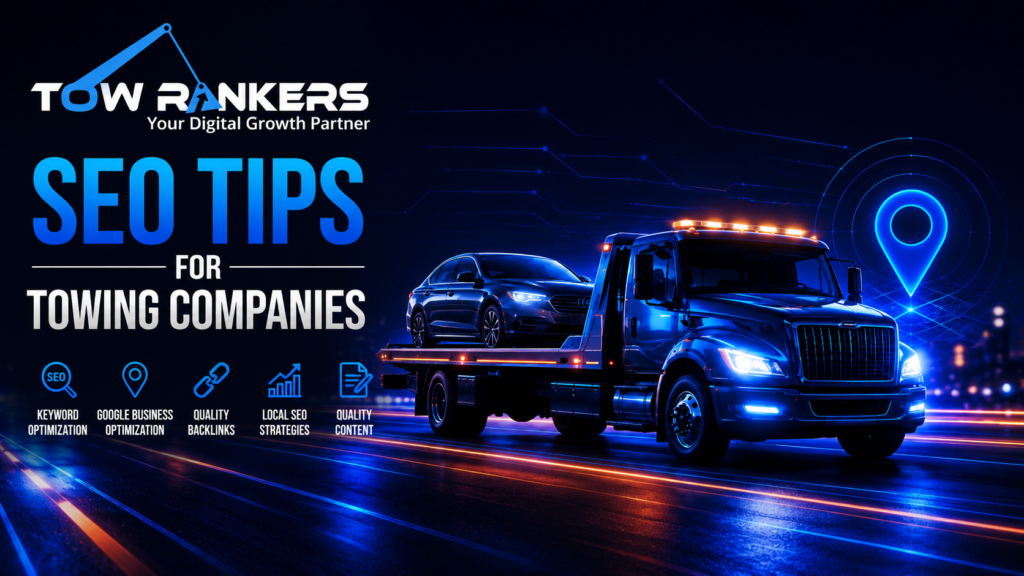
10 SEO Tips For Towing Companies
BLOG

10 SEO Tips for Towing Companies to Dominate Local Search

Blog 10 SEO Tips for Towing Companies to Dominate Local Search May 8, 2026 admin 97% of consumers search online to find local businesses, and for towing companies, that number might as well be 100. When a driver is stranded on the side of the road, they aren’t flipping through a phonebook or asking a friend. They’re on Google within seconds, and the data is unambiguous: the #1 result on Google captures 32% of all clicks, while businesses outside the top three receive a fraction of that attention. For towing, where every call is a revenue opportunity, that visibility gap translates directly into dollars lost or gained. The U.S. towing industry generates over $11 billion in annual revenue, yet the majority of independent operators still rely on word-of-mouth and paid ads, both of which are expensive, inconsistent, and impossible to scale. SEO changes that equation entirely. According to Bright Local, 78% of local mobile searches result in an offline purchase or phone call, making local search optimization the highest-ROI marketing channel available to a towing business. But ranking in 2026 requires more than just a Google Business Profile and a few keywords. Algorithm updates, Core Web Vitals, E-E-A-T signals, schema markup, and AI-driven search results have raised the bar significantly. This guide breaks down 10 data-backed SEO tips for towing companies, built from a deep analysis of what top-ranking competitors do well, so you can keep your dispatch line busy. An All-Inclusive List of SEO Strategies for Towing Companies Tip 1: Claim and Fully Optimize Your Google Business Profile Your Google Business Profile (GBP) is the single most powerful local SEO asset you own, and it’s free. When someone searches “towing company near me,” Google shows a local Map Pack of three businesses before any organic results. Getting into that Map Pack starts with a fully optimized GBP. What to do: Select the most accurate primary category (e.g., Towing Service) Fill in your complete service area, business hours, and a keyword-rich business description Upload high-quality photos of your trucks and team Enable the call and booking buttons Use the Q&A section to pre-answer common questions like pricing and response time Post regular GBP updates — Google rewards active profiles Pro tip: Keep your Name, Address, and Phone number (NAP) identical across your GBP, website, and every other online listing. Even a small inconsistency, “St.” vs. “Street,” can hurt your local rankings. Tip 2: Build a Rock-Solid Keyword Strategy Every piece of SEO effort needs a keyword foundation. For towing companies, the most valuable keywords fall into two buckets: Keyword Type Examples Emergency / High-intent “tow truck near me,” “24-hour towing [city],” “emergency towing service” Service-specific “flatbed towing,” “heavy-duty towing,” “long-distance towing,” “accident recovery” Informational “how much does towing cost,” “what to do when your car breaks down,” “roadside safety tips” Local modifiers “towing company in [neighborhood],” “tow truck [freeway/landmark]” Use tools like Google Keyword Planner, Semrush, or Keyword Surfer to find search volume data. Target a mix of high-volume terms and lower-competition long-tail keywords; they convert better because the searcher’s intent is crystal clear. Tip 3: Create Dedicated Service and Location Pages One of the biggest missed opportunities for towing companies is relying on a single homepage to rank for every service and every city they cover. That approach almost never works. Instead, build individual landing pages for each: Service type: flatbed towing, motorcycle towing, heavy-duty recovery, winch-out service, roadside assistance, jump starts, lockouts Location: every city, town, or neighborhood in your service area Each page should include the target keyword in the title tag, H1, first paragraph, and meta description. Include a Google Map embed, your local phone number, and customer reviews specific to that area. These pages become targeted entry points for the exact searches your customers are making. Tip 4: Optimize Your Technical SEO Foundation Fast, crawlable websites rank higher. Technical SEO ensures Google can find, understand, and trust your site. Key areas to audit: Technical Factor Why It Matters Target Core Web Vitals (LCP) Measures loading speed Under 2.5 seconds Core Web Vitals (CLS) Measures visual stability Score below 0.1 Mobile responsiveness 80%+ of towing searches happen on mobile Fully responsive HTTPS / SSL Google penalizes unsecured sites Must be active XML Sitemap Helps Google crawl all your pages Submitted to Search Console Crawlability Ensures no pages are accidentally blocked Check robots.txt Use Google Search Console to identify crawl errors, and Page Speed Insights to measure your Core Web Vitals scores. A site that loads in under 2.5 seconds on mobile is not optional in a field where every second matters. Tip 5: Add Schema Markup (Structured Data) This is one of the most overlooked SEO advantages available to towing companies, and your competitors almost certainly aren’t using it. Schema markup is a code snippet you add to your website that tells Google exactly what your business is and what it offers. For towing companies, the most important schema types are: Local Business schema: Communicates your name, address, phone, hours, and service area directly to Google Service schema: Describes each towing service you offer FAQ schema: Makes your FAQ answers eligible to appear directly in search results Review schema: Displays your star rating in the search snippet Schema markup increases your chances of appearing in rich results, Google AI Overviews, and featured snippets, all of which dramatically increase click-through rates without requiring a higher ranking. Tip 6: Build Your E-E-A-T Signals Google evaluates content using a quality framework called E-E-A-T: Experience, Expertise, Authoritativeness, and Trustworthiness. For a towing company, an emergency service that people rely on in stressful moments, these signals are especially important. How to build E-E-A-T for your towing website: Add an About Us page with real team bios, years of experience, and certifications Display your business license, insurance information, and any industry affiliations (AAA approval, Wreck Master certification, etc.) Showcase before/after photos and video testimonials from real customers Earn mentions from local news outlets, community organizations, or auto industry publications Maintain a
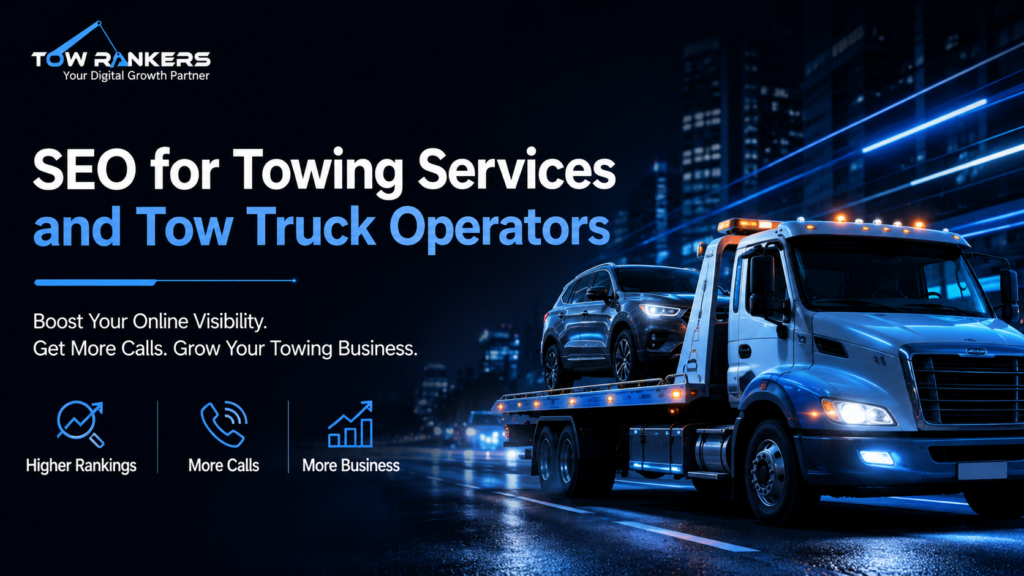
seo-for-towing-services-and-tow-truck-operators
BLOG

SEO for Towing Services and Tow Truck Operators: The Complete Guide

Blog SEO for Towing Services and Tow Truck Operators: The Complete Guide May 7, 2026 admin When a driver is stranded on the side of the highway at midnight, they do one thing: reach for their phone. They search ‘tow truck near me’ or ’emergency towing service’ and call the first result they trust. If your towing company is not in those first few results, that job, and every job like it, goes to a competitor. Search engine optimization (SEO) for towing services is the strategy that puts you at the top of those results. Unlike traditional advertising, such as billboards or flyers, SEO works 24/7. Your optimized website becomes your most reliable dispatcher, generating qualified calls even while your trucks are already on the road. This guide covers every proven tactic, from Google Business Profile optimization and local citation building to technical SEO, schema markup, content strategy, and AI-powered automation, so you can dominate local search in your service area and grow your towing business sustainably. Why SEO Matters for Towing Companies? The global vehicle roadside assistance market was valued at USD 28.7 billion in 2025 and is projected to reach USD 44.1 billion by 2035. That growth is driven largely by mobile search. Nearly every towing-related search happens on a smartphone, and users searching for roadside help carry high-intent, urgent purchase intent; they are not browsing, they are ready to call. Most towing searches share distinct characteristics that make SEO uniquely valuable for this industry:         Urgency: Customers need help immediately. Speed of discovery matters above all else.         Hyperlocal intent: Searches like ‘tow truck near me,’ ‘car lockout service downtown,’ or ‘roadside assistance I-95 exit 42’ are hyperlocal by nature.         Voice search: Drivers with a flat tire are just as likely to say ‘Hey Siri, find a tow truck’ as they are to type. Voice search optimization is non-negotiable.         Mobile-first behavior: Google indexes mobile versions of sites first. A slow or non-responsive towing website loses rankings and customers simultaneously. Organic SEO also delivers results that paid advertising cannot sustain alone. A well-optimized towing website generates inbound leads continuously, without per-click costs, building a compounding return over time. Local SEO: The Foundation for Towing Companies Local SEO is the practice of optimizing your online presence so your towing business appears in searches performed near your service area. For towing operators, this means ranking in the Google Map Pack, the three business listings displayed above organic results for local queries. Appearing in the Map Pack alone can double your call volume. Optimize Your Google Business Profile Your Google Business Profile (GBP) is the single most important local SEO asset you own. It powers your appearance in the Map Pack, Google Maps, and local search results. An incomplete or unoptimized GBP profile is the number one reason towing companies lose local rankings.         Set ‘Towing Service’ as your primary category. Add secondary categories such as Roadside Assistance, Car Lockout Service, and Tire Repair Service.         Ensure your Name, Address, and Phone (NAP) information is exactly consistent with every other listing online. Even minor discrepancies weaken your local authority.         Add photos of your tow trucks, equipment, and team. Profiles with high-quality images receive significantly more engagement and calls.         Publish regular GBP posts, service updates, seasonal offers, and emergency announcements, to signal to Google that your profile is actively managed.         Use the GBP Q&A feature to pre-answer common driver questions, which also adds keyword-rich content to your profile. It is equally important to claim and optimize your listings on Bing Places, Apple Maps, and Waze. Many drivers, particularly iPhone users, rely on Apple Maps for navigation. Ignoring these platforms leaves a meaningful portion of potential calls unaddressed. Explore More: Google Business Profile Optimization for Towing Companies Build and Manage Local Citations A local citation is any online mention of your towing business’s name, address, and phone number. Citations on trusted directories, Yelp, Yellow Pages, BBB, Angi, and industry-specific platforms like AAA partner directories and insurance company referral networks signal to Google that your business is legitimate and locally relevant. NAP consistency across all citations is critical. Google cross-references your listings. Conflicting information creates confusion for search algorithms and can suppress your Map Pack rankings. Keyword Research and Strategy for Towing SEO Effective keyword research for towing SEO starts with understanding search intent. The majority of towing-related searches fall into urgent, transactional intent; users want help now, not later. Your keyword strategy should reflect this. Keyword Type Example Keywords SEO Priority Emergency/Urgent tow truck near me, emergency towing 24/7 Highest Service-specific flatbed towing, vehicle recovery service High Location-based towing service [city], tow truck [zip code] High Roadside assistance jump start service, flat tire help near me Medium-High Voice search who tows cars near me, get my car towed now Growing Build dedicated service area pages for each city, county, or corridor you serve. A page titled ‘Towing Service in [City Name]’ with locally relevant content, driving directions, and service details outperforms a generic ‘We serve all of [State]’ statement every time. Also target long-tail keyword variants such as ‘affordable tow truck open now’ or ’24-hour roadside assistance near highway.’ These phrases carry lower competition and extremely high conversion intent. On-Page SEO for Towing Websites On-page SEO ensures every page on your towing website sends clear, accurate signals to search engines about what you do and where you do it.  Title tags: Include your primary keyword and city name. Example: ‘Emergency Towing Service in Phoenix, AZ | Fast 24/7 Help’  Meta descriptions: Write a compelling 150–160 character summary that highlights speed, availability, and service area. Meta descriptions do not directly affect rankings but significantly impact click-through rates.  Header tags (H1–H3): Each service page should have a single H1 containing your target keyword. Use H2 and H3 subheadings to organize content and

BLOG

How Often Should You Post on Your Google Business Profile?

Blog How Often Should You Post on Your Google Business Profile? May 6, 2026 admin Most business owners set up their Google Business Profile, spend an afternoon filling in the details, and then never touch it again. That’s a costly mistake. Your Google Business Profile (GBP) is often the very first thing a potential customer sees before they ever reach your website. It appears in Google Search, Google Maps, and increasingly in AI-generated local answers. And unlike your website, it has one feature that most businesses completely ignore: the ability to publish posts directly to your profile, showing up in front of high-intent customers exactly when they’re ready to act. The question isn’t whether you should post. It’s how often, and what to post when you do. This guide gives you the complete, practical answer. The Short Answer: At Least Once a Week If there’s one number to anchor to, it’s one. For the vast majority of businesses, posting at least once per week on your Google Business Profile is the baseline. Two to three times per week is the ideal range for businesses actively trying to grow their local visibility. Here’s why frequency matters more than most people realize: standard GBP posts (the “What’s New” type) lose their prominent placement in your profile after seven days. Google shows up to ten of your most recent updates in the Updates section, and anything older than six months is archived. If you go weeks without posting, your profile’s Updates section looks bare, and bare profiles signal to both Google and potential customers that a business may be inactive or unreliable. Posting consistently keeps your profile populated with current, relevant content. It signals to Google that your business is active, engaged, and worth surfacing in local search results. Think of it this way: If two competitors are identical in every other way, but one posts three times a week and the other hasn’t posted in two months, Google favors the one that looks alive. How GBP Posts Impact Your Local SEO Rankings? Google ranks local businesses using three core factors: relevance, distance, and prominence. Regular posting directly strengthens the prominence factor, the signal that tells Google your business is well-known, active, and trusted by the community. Here’s what consistent posting actually drives: More profile views (your listing appears fresher in local results) More website clicks from your GBP More phone calls initiated directly from search More direction requests Increased review velocity (more profile visits naturally lead to more review prompts and responses) Around 46% of all Google searches carry local intent. Of those, 70% of mobile searchers call a business directly from the results page, and those calls convert up to 15 times better than web leads. A regularly updated GBP profile is one of the most direct levers you have over that conversion chain. Posting Frequency by Business Type There’s no single posting frequency that fits every business. The right cadence depends on your industry, how much news you generate, and your competitive landscape. Business Type Recommended Frequency Why Towing & roadside assistance 3–5 times per week Emergency-intent searches happen 24/7; frequent posts keep your profile at the top of local results and reinforce trust with distressed drivers making split-second decisions Restaurant / café 3–5 times per week Daily specials, limited offers, and events warrant frequent updates Retail store 2–4 times per week New arrivals, promotions, and seasonal content are natural weekly drivers Service business (plumber, electrician, cleaner) 1–2 times per week Less news volume; focus on service highlights and reviews Professional services (lawyer, accountant, consultant) 1 time per week Thought leadership and seasonal moments (e.g., tax season) drive content Multi-location / franchise 1 post per location per week National campaigns anchored by localized content per location B2B / slow-moving industry 1 time per week or bi-weekly Quality and relevance matter more than frequency in low-competition verticals The rule across all categories: never let more than two weeks pass without a post. A profile that hasn’t been updated in a month tells Google, and customers, that something might be wrong. The Four GBP Post Types and When to Use Each Google gives you four distinct post formats. Using all four in rotation keeps your profile dynamic and ensures you’re matching different customer intents. 1. What’s New Your everyday update. Use it for general announcements, service highlights, seasonal reminders, behind-the-scenes content, or sharing a recent customer testimonial. This is your workhorse post type, use it at least once per week. 2. Offers Built for promotions, discounts, and time-sensitive deals. Offer posts include fields for start and end dates, coupon codes, and terms and conditions, and they stay prominently visible on your profile until the offer expires. Use these whenever you’re running a promotion. 3. Events Planning a pop-up, workshop, open day, or community event? Event posts include date and time fields and remain live until the event ends. These are valuable for foot-traffic-driven businesses like retailers, restaurants, and service providers. 4. Products Tied to your GBP product catalogue, these highlight specific items or services. Use them to drive attention to high-margin or seasonally relevant products. Pro tip: Rotate through all four types based on what’s happening in your business, rather than defaulting to one type every week. Variety signals to Google that your profile is rich and multi-dimensional. When Is the Best Time to Post? Google doesn’t publish official guidance on optimal posting times, but industry data and testing point to a consistent pattern: Best days: Tuesday, Wednesday, and Thursday outperform weekends for most businesses Best window: Mid-morning to early afternoon, roughly 9 AM to 12 PM, aligns with the peak period when people are actively searching and making decisions Worst time to post: Friday afternoons and weekends tend to see lower engagement for service-based businesses (though restaurants and retail are exceptions) That said, no universal answer replaces your own data. Use the GBP Insights dashboard to review which posts generate the most profile views, clicks, and call actions, then adjust

why-your-towing-company-needs-a-website-in-2026
BLOG

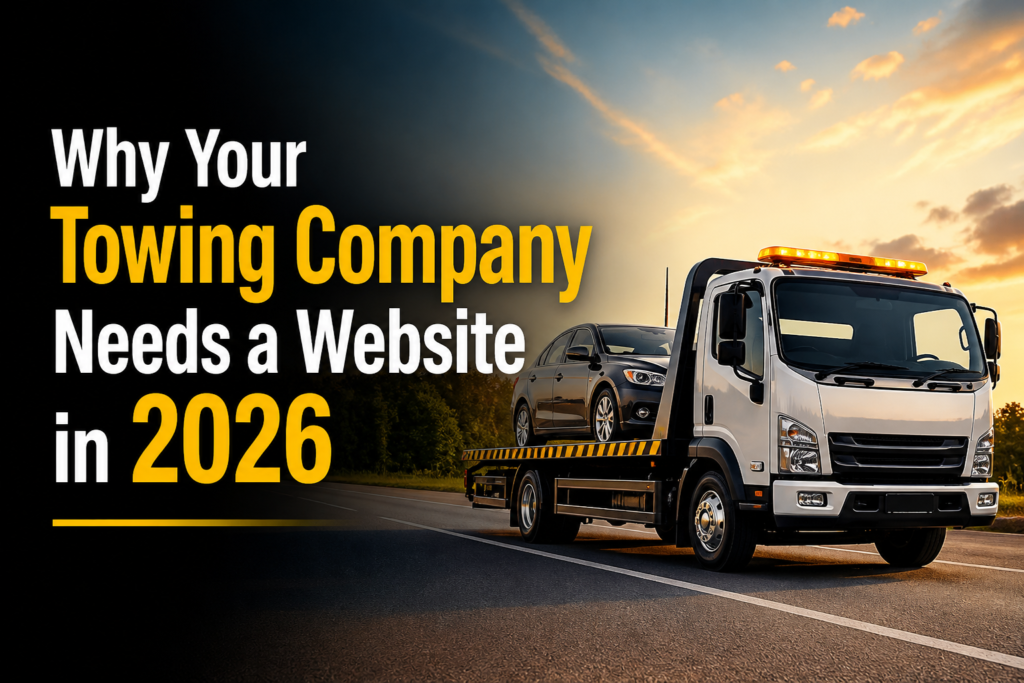
Why Your Towing Company Needs a Website in 2026?

Blog Why Your Towing Company Needs a Website in 2026? May 5, 2026 admin Picture this: it’s 2 a.m. on a Wednesday. A driver’s car just died on the highway. They’re stressed, it’s dark, and they pull out their phone and search “tow truck near me.” Your company shows up. They tap your link. The page takes eight seconds to load, the phone number is buried at the bottom, and the site looks like it hasn’t been touched since 2014. They hit back and call your competitor. That job is gone. You never even knew it existed. This is happening every single night across your service area, and if your towing company doesn’t have a strong, professional website, you’re handing revenue to the competition while you sleep. In this guide, we’ll break down exactly why your towing business needs a website, what it must include, and how to turn it into a 24/7 lead machine. The Real Cost of Not Having a Website Let’s talk numbers before anything else. The average emergency tow job generates between $75 and $250 in revenue. If your lack of online presence causes you to miss just one call per night, that’s a potential loss of $27,000—$91,000 per year in missed revenue, from a single gap in your digital strategy. Around 30% of all business activity now happens online. For towing specifically, the figure is even more striking: roughly 90% of towing searches happen on mobile phones, and most of them occur outside normal business hours. Without a website, you don’t exist for those customers. A social media page alone isn’t enough. Scam profiles and duplicate listings have made customers deeply skeptical of Facebook pages without a corresponding website. A professional site is the difference between a legitimate business and one they’ll scroll past. 5 Powerful Reasons Your Towing Company Needs a Website 1. You Become Visible When Customers Need You Most Every towing customer is having a bad day. Nobody plans to need to a tow. That means every search is an emergency search, and emergency searchers don’t browse five websites. They call the first credible result they find. A website optimized for local SEO puts you in front of those searchers at exactly the right moment. When someone types “flatbed towing near me” or “emergency towing in [your city],” a well-built site, complete with location-based content, city-specific service pages, and Google Maps integrations, tells Google you’re the most relevant answer. Without a website, your Google Business Profile can only do so much. The two work together: your GBP drives discovery, your website drives conversion. 2. It Builds Instant Trust and Credibility In an emergency, customers make snap decisions. A towing company with a professional website, displayed star ratings, and genuine Google reviews wins the call over a competitor with none of those signals every single time. Your website is where trust is built. Key credibility elements include: Trust Signal Why It Matters Customer reviews & star ratings 88% of consumers trust online reviews as much as personal recommendations SSL certificate (HTTPS) Shows the site is secure; Google uses it as a ranking signal Insurance & USDOT number Confirms legitimacy to both individual customers and fleet managers Professional team bios & About Us page Humanizes the business and communicates values Fleet showcase with truck photos & specs Confirms you have the right equipment for the job A page displaying your licenses, insurance coverage, and USDOT number doesn’t just reassure nervous customers; it’s the gateway to high-value B2B contracts with insurance companies, fleet operators, and municipal authorities, all of whom require proof of credentials before signing agreements. 3. Your Website Works 24/7 — Even When You’re Asleep Your towing operation runs around the clock. Your website should too. Unlike a phone that goes to voicemail at midnight, a fast and well-structured website answers every visitor’s questions, displays your emergency contact number prominently, and captures leads, all without any staff involvement. This is where the practical design of your site becomes critical. A towing website built for real-world use must have: A large, tap-to-call phone number at the very top of every page, no scrolling, no hunting Page load time under 3 seconds on mobile cellular connections Mobile-first design with large buttons, readable fonts, and no disruptive pop-ups After-hours call handling, whether a live answering service, automated dispatch system, or AI call responder that captures location and sends alerts An online quote or booking form for non-urgent scheduled tows Every second of load time costs you customers. A site that takes five seconds to load loses nearly half its visitors. For a towing company, that’s not a statistic, that’s real jobs driving to your competitors. 4. It Dominates Local Search Results Local SEO is the single most powerful driver of inbound towing leads. A website lets you build out the content infrastructure that makes Google trust you as the top answer for searches in your area. Effective local SEO for towing companies includes: NAP consistency: Your business Name, Address, and Phone number must be identical across your website, Google Business Profile, Yelp, and every other directory listing Service-area pages: Dedicated pages for each city, town, and highway corridor you cover (e.g., “Towing Services in [City Name]” or “Emergency Towing on I-65”) Schema markup: Structured data code (Local Business, Service, and FAQ Page schema) that helps Google display rich results like star ratings, business hours, and service types directly in search Location-specific keywords: Phrases like “tow truck near me,” “24-hour towing [city],” and “flatbed towing [neighborhood]” embedded naturally throughout your content Schema markup is a critical entity that every one of your competitors overlooks entirely. Implementing it can get your business featured in Google’s rich results, map packs, and AI-powered answer panels, placements most towing companies never reach. 5. It Opens Doors to Google’s Most Valuable Ad Placements Google Local Services Ads (LSAs) sit above regular paid ads and organic results at the very top of the search page. They display a “Google Guaranteed” badge, your

BLOG

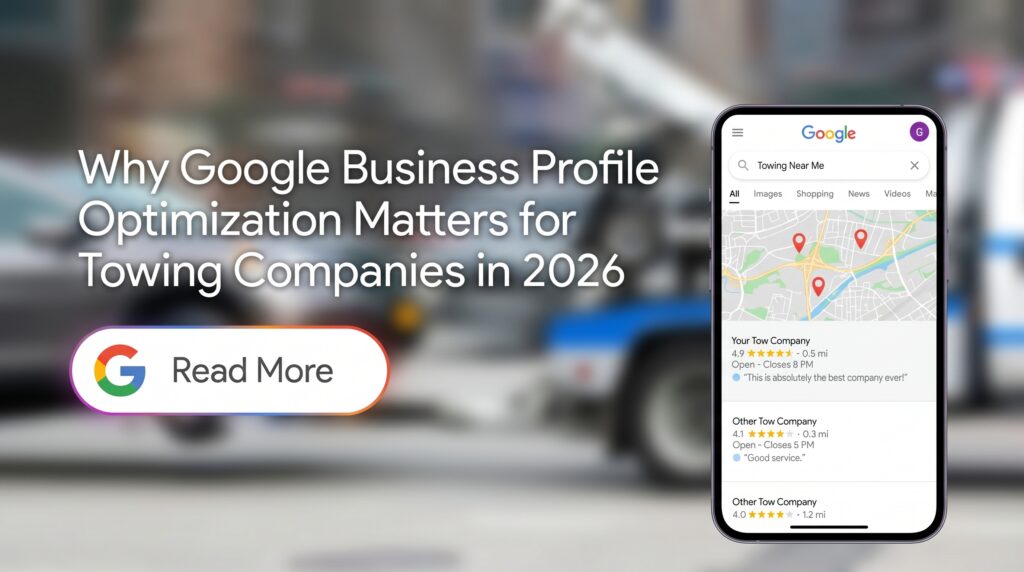
Google Business Profile Optimization for Towing Companies

Blog Google Business Profile Optimization for Towing Companies April 27, 2026 admin When a driver is stranded on the highway at 2 a.m. with a blown tire and a dead engine, they are not scrolling through a website. They are typing “tow truck near me” into Google and calling the first name that appears. That split-second decision, made under stress, made fast, is won or lost entirely by your Google Business Profile (GBP). For towing companies, a fully optimized GBP is not a marketing nicety. It is the single most direct line between a customer’s emergency and your phone ringing. In 2026, with Google tightening its local search algorithms and local competition fiercer than ever, simply claiming a profile is no longer enough. This guide breaks down exactly why GBP optimization matters for towing companies and how to use it to outrank every competitor in your service area. Towrankers helps your business get seen where it matters most. What Is a Google Business Profile, and Why Towing Companies Cannot Afford to Ignore It ? A Google Business Profile is a free listing that controls how your towing business appears across Google Search and Google Maps. When someone searches for roadside assistance or emergency towing, Google displays the top three results directly below the map, a feature known as the Local Pack or Map Pack. Every result in that pack is a GBP listing. Your profile surfaces your business name, phone number, address, hours of operation, photos, reviews, and star rating, all before a potential customer ever visits your website. It is your digital storefront for the highest-intent traffic that exists: people who need help right now. Customers searching “24-hour towing: or “flatbed tow near me” are not browsing. They are ready to call. A weak or incomplete GBP means those calls go directly to a competitor who had the foresight to optimize theirs. How Google Decides Which Towing Companies Rank First ? Google uses three core local ranking factors to decide which businesses appear in the Map Pack. Understanding all three is the foundation of any serious optimization strategy. Relevance It measures how well your GBP matches what the searcher is looking for. This is driven by your business categories, service descriptions, and the keywords embedded in your profile content. Selecting the right primary category, such as “Towing service,” and adding accurate secondary categories like “Roadside assistance,” “Heavy equipment hauling,” or “Truck rental agency” tells Google precisely what your business does. Distance Distance refers to how close your towing company is to the person searching. While you cannot move your yard, you can optimize your service area settings inside GBP to define the geographic zones you cover. This signals to Google where your listing should appear, extending your relevance beyond your immediate address. Prominence It reflects how well-known and trusted your business is online. It is shaped by the volume and quality of your customer reviews, the number and consistency of your online directory and citation listings (Yelp, BBB, Yellowpages, and others), and the authority of your website link attached to your GBP. Profile Verification: The Step Most Towing Companies Get Wrong Before any optimization can take effect, your GBP must be verified. Google offers several verification methods: postcard, phone, email, and, increasingly for towing companies, video verification. Video verification is Google’s newer, more rigorous method, and it is becoming the standard for service-area businesses in high-risk categories, and towing falls squarely into that bracket. The process requires a live video walkthrough showing your tow trucks, equipment, and business location. Every detail in the video must match what is listed on your profile exactly. Getting verification wrong wastes weeks. Repeated failures can trigger a profile suspension, removing your business from Google Maps until reinstatement, a process that can take weeks or longer. Towing companies face suspension at higher rates than most categories due to the volume of fraudulent listings in the space. Verification precision is protective, not optional. The GBP Features That Actually Drive Towing Calls Once verified, your profile becomes a live marketing engine, but only if every feature is actively used. Business categories and attributes are the most underused ranking tools in GBP. Beyond your primary category, Google allows you to add specific GBP attributes such as 24-hour emergency service, accepted payment methods, and accessibility features. These attributes directly affect which searches your profile qualifies for. Photos and video content are your proof of credibility at the moment of decision. Upload high-resolution images of your tow trucks, drivers, and equipment. More importantly, publish before and after job photos; these outperform generic fleet shots for conversion because they demonstrate active capability rather than passive presence. Google Posts keep your profile current. Regular updates, whether announcing seasonal service availability, promoting a flat-rate offer, or highlighting winter roadside assistance, signal to Google that your profile is active. Active profiles consistently rank higher than dormant ones. The Q&A section is a public trust surface that most towing companies ignore entirely. Proactively seeding it with common questions (“Do you offer 24-hour towing?”, “What areas do you cover?”, “Do you tow motorcycles?”) and answering them yourself turns a neglected feature into a keyword-rich conversion tool. GBP messaging allows customers to text your business directly from the listing for non-urgent inquiries, scheduling, pricing questions, or transport requests. Enabling it and responding promptly signals a response time that customers factor heavily into their decision to call. Reviews, Reputation, and the E-E-A-T Framework In an industry where customers are stressed and trusting a stranger with their vehicle, reviews are everything. Your customer reviews and star rating are the first things potential customers read, and a direct input into Google’s prominence ranking factor. Consistent review generation builds rating velocity. After every job, send an automated SMS review request with a direct link to your Google profile. This single tactic, implemented systematically, compounds into a significant review advantage over competitors who rely on customers to find the form themselves. Every review deserves a response. A thoughtful reply to

BLOG

How to Tow an Automatic Car Safely? Methods & Tips

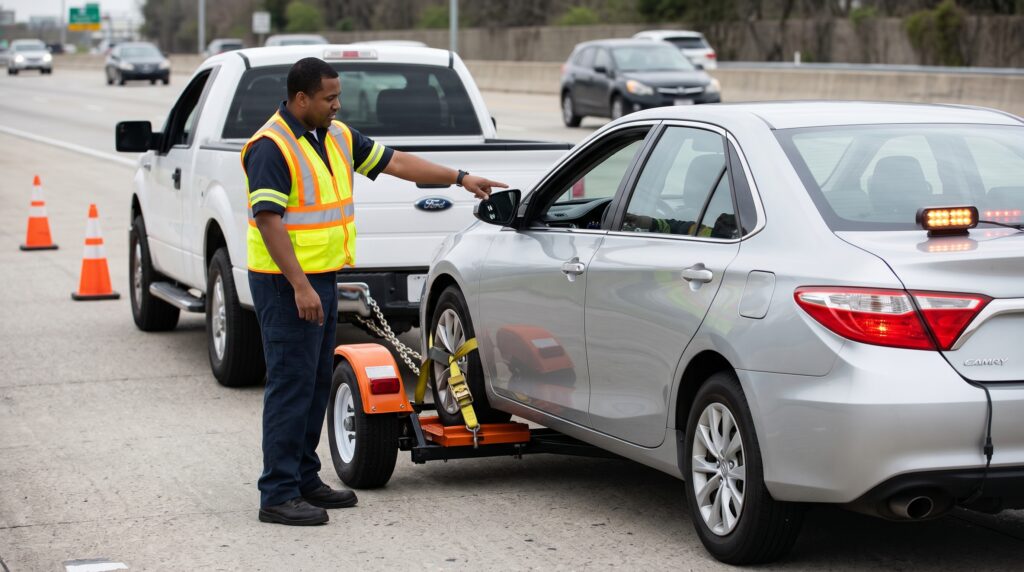
Blog How to Tow an Automatic Car Safely | Methods & Tips April 23, 2026 admin Towing a vehicle equipped with an automatic transmission requires a more cautious approach than towing a manual car. The core issue lies in the way automatic gear systems are designed: they depend heavily on continuous fluid circulation, which is typically maintained when the engine is running. When that flow stops, the internal components may not receive adequate lubrication during movement. This is why vehicle owners often ask practical questions such as Is it okay to tow an automatic car in neutral? Can you tow an automatic car a short distance without causing harm? What happens if the car won’t start and still needs to be moved?  The correct approach varies based on drivetrain layout, towing equipment, and the condition of the vehicle at the time of recovery. Because improper towing can result in severe transmission damage, understanding the correct handling procedure is essential. Whether the situation involves a roadside breakdown, a mechanical failure, or emergency relocation, using the right towing method helps prevent long-term mechanical wear and expensive repairs. Is It Safe to Tow an Automatic Car? Understanding the Reality Modern vehicles increasingly use automatic transmissions, largely due to their ease of driving and widespread availability across most manufacturers. In many cases, manual variants are no longer offered, making automatics the default choice for everyday drivers. However, this convenience comes with specific limitations when it comes to towing. A common misconception is that placing the gear selector in neutral makes it safe to tow an automatic vehicle like a manual one. In reality, this is not always true. Most automatic transmissions rely on an engine-driven lubrication system, meaning internal parts may not be properly lubricated when the engine is off. If the vehicle is dragged with its drive wheels on the ground while the engine is not running, the transmission components can rotate without sufficient lubrication. Over time, or even within a short distance, this can lead to overheating and internal damage. For this reason, many manufacturer guidelines explicitly advise against flat towing automatic vehicles unless specific conditions are met. That said, towing is still possible when done correctly. The key requirement is ensuring that the drive wheels are not forced to rotate on the ground. This usually means lifting the driven axle completely off the surface using appropriate towing equipment such as a flatbed or wheel-lift system. In practical terms, an automatic vehicle should not simply be attached to a standard tow bar and pulled with all wheels rolling on the road, as this setup is not suitable for most automatic drivetrains. You May Also Read: How to Tow a Car with a Truck? Methods of Towing an Automatic Car There is no single universal way to tow an automatic vehicle safely. The correct method depends on the drivetrain layout, vehicle weight, and the type of towing equipment available. Broadly, towing is carried out using three commonly accepted approaches, each with its own level of safety, complexity, and limitations. Method 1. Towing an Automatic Car Using a Tow Bar A tow bar setup connects the disabled vehicle directly to the towing vehicle through a rigid linkage. In this arrangement, the car being towed remains in contact with the road surface while being pulled from the front. This method is often chosen because of its simplicity and quick setup. However, it comes with strict operational requirements. The transmission must be placed in neutral to prevent mechanical resistance during movement. If this step is ignored, the internal gearbox components may be forced to rotate incorrectly, increasing the risk of damage. Weight capacity is another critical factor. Most standard tow bars are designed for lighter loads, typically around the 3,500-pound range, and exceeding this limit can compromise both safety and control. Proper installation is equally important. Safety chains must be secured, electrical connections for brake lights and indicators should function correctly, and the tow vehicle must be able to communicate braking signals effectively. Without these precautions, road safety becomes a concern. Method 2. Using a Tow Dolly for Automatic Vehicles A tow dolly lifts the front axle of the disabled car off the ground while the rear wheels remain on the road. This makes it especially suitable for front-wheel-drive vehicles, as the driven wheels are elevated during transport. Compared to a tow bar, a dolly provides more flexibility in certain scenarios. It can be used even when full neutral towing is not recommended, and it helps reduce strain on the transmission since the drive wheels are not rolling freely on the road surface. Despite its advantages, this method also has practical drawbacks. The additional equipment increases overall weight, which can reduce fuel efficiency for the towing vehicle. Maneuvering a dolly setup can also be more challenging, particularly in tight spaces or heavy traffic conditions. As with any towing system, proper securing of the vehicle is essential. Straps, wheel locks, lighting connections, and signaling systems must all be correctly installed before moving the vehicle. Method 3. Towing an Automatic Car in Neutral One commonly discussed approach is placing the vehicle in neutral and towing it with all wheels on the ground. In theory, this allows the wheels to rotate without engaging the transmission directly. However, this method is not universally safe for all automatic vehicles. Many transmissions rely on engine-driven lubrication systems, meaning internal components may not receive adequate oil flow when the engine is off. As a result, rotating the drivetrain while the engine is inactive can lead to overheating and internal wear. For this reason, manufacturer guidelines often restrict or discourage this towing method unless the vehicle is specifically designed to support it. Checking the owner’s manual is essential before attempting this option. Even when neutral towing is technically allowed, it is typically limited to short distances and low speeds. If the drive wheels remain in contact with the road for extended periods, the risk of transmission damage increases significantly. Safety Steps to Follow

How Much Can a Toyota Tacoma Tow?
BLOG

How Much Can a Toyota Tacoma Tow?

Blog How Much Can a Toyota Tacoma Tow? February 17, 2026 admin When your next plan involves hauling a camper into the mountains, towing a fishing boat to the lake, or transporting recreational equipment for a weekend escape, towing capability becomes a deciding factor. The Toyota Tacoma has long been recognized for blending durability, versatility, and manageable size, and its towing performance continues to make it a strong contender in the midsize truck category. In its latest generation, the Toyota Tacoma delivers a maximum towing capacity of up to 6,500 pounds when properly configured. That figure places it firmly among the most capable midsize pickups available today. However, towing capacity is not universal across the lineup. With eleven distinct trim levels offered for the 2025 model year, towing limits vary significantly depending on engine choice, drivetrain, cab style, bed length, and whether factory towing equipment is installed. To help you make an informed decision, the sections below provide a detailed breakdown of 2025 Toyota Tacoma towing specifications by trim, an in-depth look at payload and bed functionality, and a comprehensive comparison of towing capacities across nearly three decades of Tacoma model years. 2025 Toyota Tacoma Towing Specs at a Glance Before diving into trim-level details, here is a high-level overview of what the 2025 Toyota Tacoma is capable of when it comes to towing and hauling: Maximum Towing Capacity: When equipped with the appropriate configuration and factory towing equipment, the 2025 Toyota Tacoma can tow up to 6,500 pounds, making it suitable for midsize campers, small boats, enclosed utility trailers, and recreational equipment. Available Engine Options: Buyers can choose between two modern powertrains:         The i-FORCE 2.4-liter turbocharged four-cylinder engine, engineered for balanced power and efficiency         The i-FORCE MAX 2.4-liter turbocharged hybrid powertrain, which adds electric assistance for improved torque delivery and onboard power capabilities Payload Capacity: In addition to towing strength, the Tacoma can handle substantial bed loads. Select trims, such as the TRD Off-Road i-FORCE MAX, offer a maximum payload capacity of up to 1,705 pounds, allowing drivers to transport tools, equipment, or adventure gear with confidence. Towing Technology and Safety Features: The Tacoma incorporates modern towing aids such as Trailer-Sway Control, along with an available Class-IV towing package that includes a hitch receiver and wiring harness to enhance stability, braking confidence, and overall safety while towing. 2025 Toyota Tacoma Towing Capacity, Payload Rating & Bed Capability The 2025 Toyota Tacoma is engineered to perform the core duties expected of a midsize pickup without compromising maneuverability or everyday usability. With a maximum towing capacity of 6,500 pounds and a maximum payload rating reaching 1,710 pounds on hybrid-equipped trims, the Tacoma is capable of handling a wide range of work and recreational demands. Beyond raw numbers, Toyota places significant emphasis on bed strength, durability, and versatility. The Tacoma is offered with two bed lengths, a 5-foot bed and a 6-foot bed, both of which are larger and deeper than many competitors in the same class. Rather than using traditional steel, Toyota constructs the Tacoma’s bed from high-strength molded composite materials, reinforced with aluminum components. This design improves durability, resists corrosion, and reduces overall weight, which directly benefits both payload and towing performance. Bed Dimensions Explained Regardless of bed length, the Tacoma provides generous usable space: Width between wheel wells: 44.7 inches Maximum interior bed width: 53 inches Bed depth: Ranges from 20.2 inches to 21.2 inches, depending on trim level and suspension configuration These dimensions allow the Tacoma to carry bulky cargo, wide equipment, and stacked materials more efficiently than many midsize alternatives. Integrated Bed Features That Enhance Utility What truly separates the Tacoma from others in its class is the way Toyota integrates advanced functionality directly into the bed, eliminating the need for bulky aftermarket accessories that consume cargo space. Onboard AC Power: All i-FORCE MAX hybrid models come standard with a 2,400-watt onboard AC inverter, providing enough power to run tools, portable appliances, heaters, water pumps, or camping equipment directly from the truck. Available Integrated Air Compressor: An optional built-in air compressor allows drivers to quickly inflate tires, air mattresses, and off-road equipment, especially useful for overlanding and trail use. These features are designed to support real-world scenarios, whether you’re working at a remote job site or setting up camp far from civilization. Factory Towing Package Availability Most 2025 Toyota Tacoma trims include the factory towing package as standard equipment, with the exception of the base SR model. This package typically includes: Class-IV trailer hitch receiver 4-pin and 7-pin trailer wiring harness Together, these components ensure compatibility with a wide variety of trailers, campers, and utility haulers without requiring aftermarket modifications. 2025 Toyota Tacoma Towing Capacity by Trim Level Trim Engine Transmission Cab Style Bed Size Drivetrain Max Towing SR i-FORCE 2.4L Turbo 8-speed ECT-i XtraCab / Double Cab 5 ft / 6 ft RWD / 4WD 3,500 lbs SR5 i-FORCE 2.4L Turbo 8-speed ECT-i XtraCab 6 ft RWD / 4WD 6,500 lbs TRD PreRunner i-FORCE 2.4L Turbo 8-speed ECT-i XtraCab 6 ft RWD 6,500 lbs TRD Sport i-FORCE 2.4L Turbo 8-speed ECT-i / 6-speed manual Double Cab 5 ft / 6 ft RWD / 4WD 6,400 lbs TRD Off-Road i-FORCE 2.4L Turbo 8-speed ECT-i / 6-speed manual Double Cab 5 ft / 6 ft 4WD 6,400 lbs Limited i-FORCE 2.4L Turbo 8-speed ECT-i Double Cab 5 ft RWD / 4WD 6,300 lbs TRD Sport i-FORCE MAX i-FORCE MAX Hybrid 8-speed ECT-i Double Cab 5 ft 4WD 6,000 lbs TRD Off-Road i-FORCE MAX i-FORCE MAX Hybrid 8-speed ECT-i Double Cab 5 ft 4WD 6,000 lbs Limited i-FORCE MAX i-FORCE MAX Hybrid 8-speed ECT-i Double Cab 5 ft 4WD 6,000 lbs Trailhunter i-FORCE MAX Hybrid 8-speed ECT-i Double Cab 5 ft 4WD 6,000 lbs TRD Pro i-FORCE MAX Hybrid 8-speed ECT-i Double Cab 5 ft 4WD 6,000 lbs 2025 Toyota Tacoma Towing Capacity Explained Not all Tacoma trims are built for maximum towing. The SR trim, regardless of cab style

Is a Towing Business Profitable? Complete U.S. Guide
BLOG

Is a Towing Business Profitable?

Blog Is a Towing Business Profitable? February 17, 2026 admin If you’ve ever found yourself stuck on the side of the road, waiting for a tow, you know how crucial towing services are. But beyond the immediate need of stranded drivers, towing represents a unique business opportunity. Many aspiring entrepreneurs wonder: Is starting a towing business profitable? The answer is yes, if approached strategically. In this guide, we’ll explore the financial potential, operational considerations, and long-term opportunities in the towing industry, providing a roadmap for anyone considering entering this essential service sector. Why Consider Starting a Towing Business? The towing industry combines steady demand with the potential for strong revenue streams. While automotive technology is advancing, vehicles will always experience breakdowns, accidents, or require specialized transport. For this reason, towing services remain consistently in demand. Here are several key reasons towing can be a lucrative venture: Attractive Profit Potential Tow truck operations can generate substantial margins, particularly when costs are controlled and multiple services are offered. While average net profit margins typically fall between 10% and 15%, some well-managed businesses have reported margins as high as 70% on select services. Entrepreneurial Freedom Owning a towing business allows you to be your own boss. You control schedules, service offerings, pricing strategies, and growth initiatives, giving you autonomy not found in many traditional employment roles. Practical Mechanical Insight Operators with a solid understanding of vehicle mechanics gain a competitive edge. Knowledge of automotive systems can help you troubleshoot issues, provide accurate assessments to clients, and offer additional services beyond towing. Thriving in High-Stress Scenarios Tow truck drivers frequently encounter tense situations, including distressed or frustrated vehicle owners. If you excel at managing stress and resolving conflicts calmly, this aspect of the business can be manageable and even rewarding. Scalability Opportunities Towing operations are highly scalable. As your reputation grows, you can expand your fleet, offer specialized services (like heavy-duty towing or accident recovery), or establish contracts with businesses and municipalities, multiplying revenue streams. Understanding Operating Expenses That Impact Profitability While revenue potential is high, towing businesses carry a variety of ongoing expenses. Being aware of and managing these costs is essential for profitability. Fuel and Vehicle Maintenance Tow trucks are heavy-duty vehicles with significant fuel consumption. Light-duty operations differ from heavy-duty jobs, but fuel remains one of the largest recurring expenses. Regular maintenance, including oil changes, tire replacements, brake servicing, and occasional repairs, is crucial to prevent costly downtime. Insurance and Regulatory Compliance Insurance is mandatory for all towing operations. Coverage may include liability, cargo, commercial vehicle policies, and workers’ compensation for employees. In addition, permits, licensing, and compliance fees vary by state and municipality, adding to overhead. Labor and Payroll As your fleet grows, so does the need for qualified drivers and support staff. Payroll must be managed carefully to avoid eroding profit margins while ensuring smooth, reliable operations. Dispatch Systems, Marketing, and Software Modern towing businesses often rely on dispatch software to optimize routes and response times. Marketing, whether through digital advertising, SEO, or local promotions, is vital for attracting customers. Additional software for billing, fleet tracking, and inventory management can also be a necessary expense. By monitoring these costs closely, towing business owners can identify areas to cut spending without compromising service quality. Profit Margins in the Towing Business: What to Expect Profit margins in towing can vary widely depending on the business model, service mix, and location. Understanding where revenue comes from is crucial for long-term success. Typical Margins Gross margins: Many towing jobs yield gross margins of 50% to 70%, influenced by fuel, labor, and equipment usage. Net margins: After accounting for all expenses, net profit typically falls between 10% and 30%, with some highly efficient operators reaching higher percentages through diversified services. High-Margin vs. Low-Margin Services Certain towing services are more profitable than others. Flatbed towing, winching, and roadside assistance usually offer higher margins with minimal overhead, while routine city towing, especially under competitive contracts, may be less profitable. How Location and Competition Affect Margins Urban areas tend to have higher call volumes but increased competition, which can suppress rates. Suburban and rural markets may have fewer calls but can charge higher per-job rates. Local market research is critical for optimizing profitability. Average Annual and Monthly Profits of Truck Towing in the U.S. Towing has become a significant revenue-generating service in the United States. Earnings vary depending on business size, service complexity, and geographic region: Employed drivers: $48,000–$65,000 per year, with higher pay for night shifts or specialized services. Owner-operators / small fleets: $80,000–$300,000+ annually, depending on fleet size and contracts. Monthly gross revenue: Typically $7,000–$30,000, with seasonal spikes during winter or high-incident periods. Average rates for light-duty towing now range from $175 to $325 per job, not including mileage, storage, or after-hours fees. Despite rising fuel and insurance costs, efficient operations ensure towing remains a strong-margin business. The Current Need for Truck Towing Businesses in the U.S. Several trends underpin the continued demand for towing services across the U.S.: Over 280 million registered vehicles on the road. Increased urban congestion and longer commute times. An aging vehicle fleet, with the average car over 12 years old. Higher accident rates during extreme weather events. Unlike many sectors affected by automation or digital disruption, towing is a non-discretionary service. Drivers, insurers, municipalities, and fleet operators depend on it regardless of economic cycles, making it a recession-resilient business. Future Outlook for Truck Towing in the U.S. The towing industry in the United States is not just holding steady; it’s evolving with new opportunities for growth. Several trends suggest that the long-term prospects for tow truck businesses are robust: Rising vehicle miles traveled (VMT): Americans are driving more, increasing the likelihood of breakdowns and accidents. Electric vehicle growth: EVs present unique challenges, including battery depletion, software malfunctions, and specialized accident recovery, creating new towing needs. Expanding fleet sectors: Rideshare, rental, and delivery services mean more vehicles on the road, increasing demand for reliable towing. Stricter accident clearance regulations:

How to Start a Roadside Assistance Business
BLOG

How to Start a Roadside Assistance Business

Blog How to Start a Roadside Assistance Business February 13, 2026 admin Starting a roadside assistance business is more than just having a tow truck and a toolbox. With millions of drivers on the road daily, the demand for fast, reliable help continues to rise year after year. From towing and jump-starts to tire changes and vehicle lockouts, roadside assistance has become an essential service for modern motorists. When operated correctly, this business offers consistent revenue potential, repeat customers, and opportunities for long-term contracts. However, success only comes when the business is planned, launched, and managed with precision. This industry requires a blend of operational readiness, legal compliance, customer service excellence, and smart marketing. Many new operators underestimate the importance of insurance coverage, dispatch efficiency, pricing accuracy, and branding. Others fail because they scale too quickly without strong systems in place. Avoiding these mistakes is key to building a sustainable and profitable operation. In this guide, we’ll cover 10 crucial steps to start your roadside assistance business, address common challenges faced by new operators, compare equipment and insurance options, and provide actionable, real-world tips for long-term growth and scalability. This guide is designed for towing operators, dispatchers, and fleet managers who want clarity. Whether your operations run light-duty pickups, medium-duty wreckers, or heavy-duty recovery units, understanding towing capacity allows you to assign jobs confidently, protect your equipment, and operate within compliance on every call. The Growing Roadside Assistance Market Before diving into how to start your business, it’s crucial to understand the market you’re entering and why demand continues to increase. The U.S. roadside assistance industry is projected to reach $44.67 billion by 2034, growing at approximately 4.16% annually, making it one of the most stable service-based automotive sectors. Why the growth? Increasing vehicle ownership across urban and suburban areas. Aging vehicle fleets that require frequent emergency support. Expansion of electric vehicles requiring specialized roadside services. Higher consumer expectations for on-demand, app-based convenience. Globally, roadside assistance remains strong in Europe and North America due to harsh weather conditions, traffic congestion, long commuting distances, and high vehicle density. Seasonal breakdowns, accidents, and mechanical failures ensure year-round demand. With the right service mix and response strategy, new operators can quickly establish a profitable and resilient business in this expanding market. 10 Essential Steps to Launch Your Roadside Assistance Business Launching a successful roadside assistance business requires a structured approach. Below, we outline the 10 most important steps, combining insights from industry best practices and real-world experience. Step 1: Define Your Business Vision Your business vision acts as the strategic backbone of your operation. Without a clear vision, decisions related to services, fleet investments, staffing, and marketing can become inconsistent and costly. Actionable tips: Write a detailed executive summary outlining your mission, service scope, pricing philosophy, and long-term goals. Decide whether your primary focus will be individual consumers, commercial fleets, motor clubs, or a hybrid model. Identify clear competitive advantages such as faster response times, EV-specific assistance, bilingual support, or premium customer service. Example: If your business targets urban commuters, your core services may include lockout assistance, jump-starts, tire changes, and fuel delivery. For commercial fleets or logistics companies, your focus may shift toward scheduled towing, emergency recovery, and contractual service-level agreements. Step 2: Conduct Market Research Market research ensures your services meet real demand and allows you to position yourself competitively. Skipping this step often leads to underpricing, overspending, or entering oversaturated areas. Key actions: Identify competitors within a 25-mile service radius using Google Maps, Yelp, Data Axle, and local directories. Analyze their pricing models, response times, service range, online reviews, and customer complaints. Identify indirect competitors such as auto repair shops or dealerships that offer limited towing services. Tip: Pay close attention to underserved neighborhoods, rural highways, or services competitors rarely promote, such as EV roadside assistance, motorcycle towing, or luxury vehicle transport. These gaps represent immediate opportunities. Step 3: Choose Your Business Structure and Legal Compliance Roadside assistance businesses typically operate as Limited Liability Companies (LLCs) due to their balance of liability protection and operational flexibility. Requirements: Register your LLC with your State Secretary of State office Obtain an Employer Identification Number (EIN) for tax reporting and payroll. Secure a USDOT number if operating across state lines or engaging in interstate towing. Check city and county requirements for business licenses, zoning approval, and towing permits. Comparison Table: Business Structures Structure Liability Protection Taxation Cost to Register Best For LLC High Pass-through $50–$500 Most roadside businesses Corporation Very High Double taxation $100–$800 Large-scale expansion Partnership Low–Medium Pass-through $100–$500 Small-scale operations Sole Proprietorship None Personal taxes $100–$300 Hobby or single-owner business Tip: Staying compliant not only avoids fines and shutdowns but also ensures eligibility for commercial insurance policies and motor club contracts. Step 4: Secure Insurance and Manage Risk Insurance is a non-negotiable component of roadside assistance operations. The nature of roadside work involves vehicles, traffic, weather hazards, and customer property, all of which carry risk. Insurance Type Minimum Coverage Purpose Estimated Annual Cost Commercial Auto Liability $750,000–$1,000,000 Covers accidents involving your vehicles $5,000–$12,000 On-Hook Towing Endorsement Included in Commercial Auto Covers vehicles while being towed $1,000–$2,500 General Liability $1,000,000 Protects against non-auto claims $2,000–$5,000 Garagekeepers Liability $1,000,000 For vehicles stored in your facility $1,500–$3,000 Tips: Work with insurers specializing in towing and roadside services. Bundle policies to reduce premiums. Reassess coverage annually as your fleet and revenue grow. Step 5: Acquire Equipment and Set Up Your Fleet Your fleet directly impacts service capability, response time, and customer satisfaction. Tow Truck Type Ideal For Cost (Used) Pros Cons Flatbed/Rollback Cars, SUVs $30,000–$65,000 Safe transport, versatile Higher initial cost Medium-Duty Tow Vans, light trucks $40,000–$70,000 Stronger engines, larger capacity More fuel consumption Heavy-Duty Tow Large trucks, buses $70,000–$120,000 Can tow heavy vehicles Requires CDL, expensive Additional Equipment: Lockout kits ($100–$300) Jump-start battery packs ($200–$500) Jacks, stands, and hand tools ($800–$1,600) Rigging chains, straps, cones, and safety gear ($1,000–$2,000) Tip: GPS tracking and dispatch software are essential for efficient routing, accountability, and customer

BLOG

How to Get More Towing Business: Proven Strategies That Work

Blog How to Get More Towing Business: Proven Strategies That Work February 13, 2026 admin Running a towing business can be rewarding, but only if you consistently get calls and contracts. Many tow truck service providers face slow days, unpredictable demand, and stiff competition. If you’ve ever asked yourself, “How to get more towing business?” you’re not alone. Success in towing isn’t just about owning trucks. It’s about being visible, marketing effectively, running operations efficiently, and building lasting relationships with clients, including insurance companies, fleet operators, and everyday vehicle owners. In this comprehensive guide, we’ll cover how to attract more clients, increase tow leads, secure profitable contracts, and run a towing business that thrives all year round. Optimize Your Towing Business Online Why an Online Presence is Non-Negotiable Most vehicle owners and fleet managers search online first before calling a towing service. If your business isn’t easy to find on Google, you’re missing out on hundreds of potential calls each month. Digital visibility doesn’t just generate leads; it also establishes credibility. A professional, easy-to-navigate online presence signals reliability, which is crucial in an emergency service like towing. They key steps to boost online visibility are as follows: 1. Professional Website Design Your website often forms the first impression for potential clients. Make sure services, service area, contact information, and clear calls-to-action like “Call Now” or “Request a Tow” are prominent. Include trust indicators: licenses, insurance coverage, fleet photos, and customer testimonials. 2. Local SEO Optimization Claim and optimize your Google My Business (GMB) profile. Use keywords such as “tow truck service provider,” “towing company near me,” and “tow leads.” Add photos, post updates regularly, and encourage positive reviews to improve your ranking. 3. Mobile Optimization Many tow requests come from mobile devices. Ensure fast loading, simple navigation, and easily accessible contact buttons. 4. Content Marketing Publish blogs, FAQs, and guides—for example, “How to Choose a Reliable Towing Service” or “Top 5 Reasons Your Car Needs a Tow.” Integrate keywords like “how to get more towing business online” naturally within the content. 5. Online Directories and Maps List your business in local directories such as Yelp, Yellow Pages, and MapQuest. Consistent business information across platforms boosts local search visibility. Tow Marketing Strategies to Get More Calls Marketing isn’t just about ads; it’s about creating awareness and trust so potential clients call your towing company first. Proven strategies include: 1. Google Ads and Pay-Per-Click (PPC) Marketing Run geo-targeted campaigns to reach drivers in your service area. Include emergency-focused keywords like “24/7 towing service,” “tow truck near me,” and “towing cash calls.” 2. Social Media Marketing Promote services on Facebook, Instagram, and LinkedIn, particularly for commercial clients. Share success stories, customer testimonials, and practical car tips. 3. Local Partnerships Work with repair shops, car dealerships, parking facilities, and gas stations. Offer referral commissions or bundle services for mutual benefit. 4. Vehicle Branding and Visibility Your tow trucks act as mobile billboards. Make sure your logo, phone number, and website are highly visible. Bright, consistent branding helps clients remember your service. 5. Direct Outreach to Commercial Clients Approach local fleet operators, rental companies, and logistics firms to offer towing contracts. Provide proposals highlighting response times, service reliability, and pricing. 6. Community Engagement Sponsor local events or support community initiatives to boost brand recognition. Attend trade shows or workshops relevant to automotive services. How to Get Towing Leads Efficiently Consistent tow leads are essential for predictable revenue. Following are the effective methods for lead generation: Online Lead Platforms ü  Use towing dispatch software to connect with local cash calls. ü  Ensure your profile lists availability, services, and response times. Insurance Partnerships ü  Learn how to secure towing contracts with insurance companies to access pre-approved calls. ü  Highlight experience, response time, and regulatory compliance. Fleet Contracts ü  Approach logistics and commercial fleets with flat-rate or subscription-based services. Referral Programs ü  Encourage satisfied clients to refer others with incentives or discounts. 24/7 Availability ü  Emergencies happen at any time. Being reachable around the clock boosts repeat calls. Local SEO and Reviews ü  Positive reviews influence tow leads. Actively request feedback and respond professionally. How to Run a Successful Towing Business Running a towing company goes beyond dispatching trucks. Success hinges on operational efficiency, service quality, and client trust. Operational best practices include: 1. Dispatch and Fleet Management Use software to assign calls efficiently, track trucks, and manage inventory. Monitor response times to improve customer satisfaction. 2. Vehicle Maintenance Regular servicing reduces downtime and missed calls. Keep backup trucks ready for peak periods or emergencies. 3. Driver Training and Safety Train drivers in towing safety, customer service, and basic vehicle repairs. Drivers are the face of your brand on every call. 4. Pricing Strategy Offer competitive rates for cash calls while maintaining profitability. Consider loyalty programs or bundled services for frequent commercial clients. 5. Customer Relationship Management (CRM) Track client interactions, repeat requests, and contract status. Automated follow-ups encourage repeat business. 6. Metrics and Analytics Track calls, response times, revenue per call, and customer satisfaction. Use data to identify areas for improvement and growth. How to Get a Towing Contract Contracts offer stability and predictable income. Many companies rely on insurance and fleet agreements. Step-by-Step Approach Step 1. Identify Potential Partners: Insurance companies, repair shops, and commercial fleets are prime prospects. Step 2. Build Credibility: Maintain professional branding, a functional website, and an updated GMB listing. Highlight past work, positive reviews, and safety compliance. Step 3. Prepare a Professional Proposal: Include services, response times, rates, and coverage area. Emphasize experience in handling emergency calls and fleet management. Step 4. Ensure Compliance: Verify trucks, licenses, and insurance meet local regulations. Stress adherence to safety standards. Step 5. Negotiate and Follow Up: Build relationships with decision-makers. Regular follow-ups improve the likelihood of securing contracts. Leveraging Cash Calls to Grow Revenue Cash calls are immediate, one-off towing requests that complement contracts. Tips for maximizing cash calls are: Quick Response Time: Customers choose the fastest available service. Expand Services: Offer roadside

Scroll to Top