BLOG

what-vehicles-can-be-flat-towed
BLOG

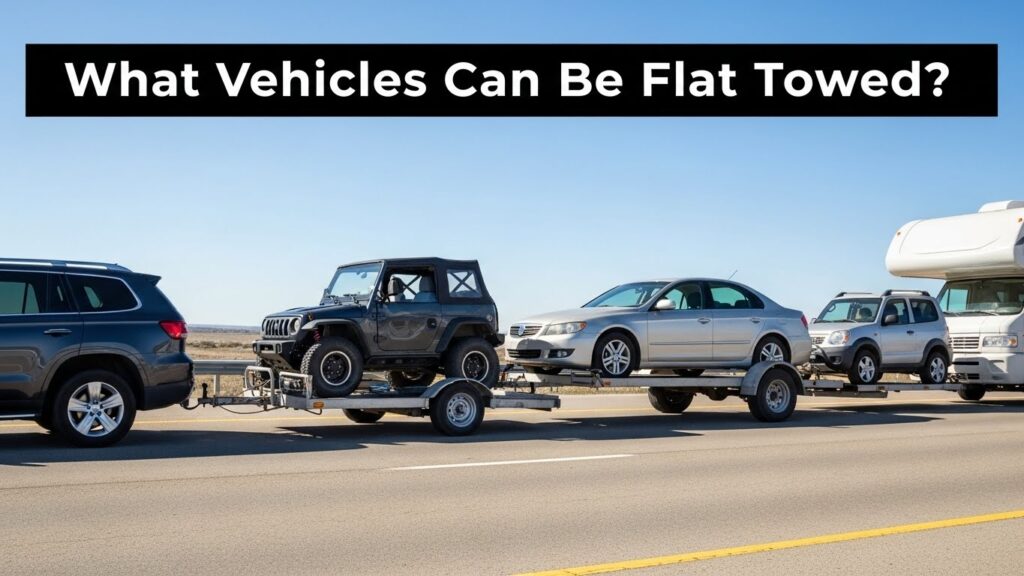
What Vehicles Can Be Flat Towed? Complete Overview

Blog What Vehicles Can Be Flat Towed? Complete Overview December 4, 2025 admin For many RV owners, nothing enhances a road trip quite like having a second vehicle ready to roll the moment you park the motorhome. Flat towing, pulling a vehicle with all four wheels on the road, remains the preferred method among seasoned RVers. The setup is compact, the hookup process is quick, and once you arrive, you gain the freedom to explore without maneuvering a full-sized RV through tight roads or crowded attractions. But the big question stands: What vehicles can actually be flat towed? And how can you be sure your specific make and model is compatible? Let’s break it all down in this comprehensive Tow Rankers guide. What Is Flat Towing? Flat towing, often called four-down towing or dinghy towing, is the process of attaching a tow-ready vehicle behind an RV using a tow bar system. Once connected, the towed vehicle rolls freely on all four wheels and trails behind the RV with minimal driver intervention. For RVers who want convenience without bulky equipment, flat towing is the perfect combination of simplicity and practicality. Different Ways to Tow a Vehicle Behind an RV Although “flat towing” technically refers to towing with all four wheels on the ground, RVers generally choose among three popular towing approaches: A-Frame (True Flat Towing) This is the classic version of four-down towing. ü  Uses an A-shaped tow bar mounted to a base plate on the towed vehicle. ü  Keeps all four wheels firmly on the pavement while traveling. ü  Most favored option for motorhomes. ü  Requires a supplemental braking system and proper alignment. A-frame towing is the only method considered true flat towing. The others below are used when a vehicle is not eligible for four-down towing. Tow Dolly Towing A tow dolly lifts the vehicle’s front wheels off the road: ü  Front wheels ride on the dolly; rear wheels stay on the ground. ü  Works well for cars that are not flat-tow capable. ü  Reduces stress on certain transmissions. ü  Requires additional loading and unloading. Trailer (Flatbed) Towing With this option, the entire vehicle sits on a flatbed trailer. ü  None of the wheels touch the ground. ü  Ideal for long-distance travel or protecting sensitive drivetrains. ü  Perfect for inoperable or specialty vehicles. While not technically “flat towing,” it’s often compared as a safer alternative for vehicles that can’t be pulled four-down. What Types of Vehicles Can Be Flat Towed? Not every car, truck, or SUV is built to handle the demands of flat towing. The capability depends heavily on the vehicle’s transmission, drivetrain, and manufacturer specifications. Still, many popular models are designed for four-down towing, including compact cars, midsize SUVs, and numerous trucks. Here’s a breakdown of common towable vehicle categories: Small Cars Lightweight cars are among the easiest vehicles to flat tow because they reduce strain on the RV and simplify braking setups. Examples may include select years of: Ford Fiesta Chevrolet Sonic Note: Always verify by checking the owner’s manual. SUVs Many RVers prefer SUVs because they offer cargo room and passenger seating once they reach their destination. Common flat-tow favorites include: Jeep Wrangler Ford Explorer Pickup Trucks A great option for RVers who want a utility vehicle at camp or need extra hauling power. Eligible models include certain years of: Chevrolet Colorado Ford Ranger Commonly Flat-Towed Vehicles These are some of the most popular vehicles chosen by RVers for flat towing. Note that compatibility varies by model year, so always check the owner’s manual for confirmation:           Buick Enclave         Buick Envision         Cadillac Escalade         Cadillac SRX         Chevrolet Blazer         Chevrolet Colorado         Chevrolet Equinox         Chevrolet Silverado         Chevrolet Sonic         Chevrolet Suburban         Chevrolet Tahoe         Chevrolet Traverse         Dodge Durango         Ford Bronco         Ford Edge         Ford Expedition         Ford Explorer         Ford F-150         Ford Fiesta         Ford Flex         Ford Focus         Ford Ranger         GMC Acadia         GMC Canyon         GMC Sierra         GMC Terrain         GMC Yukon         Honda CR-V         Jeep Cherokee         Jeep Gladiator         Jeep Grand Cherokee         Jeep Liberty         Jeep Wrangler         Lincoln MKX         Lincoln Navigator         Ram 1500 How to Determine If Your Vehicle Can Be Flat Towed Before towing any vehicle behind an RV, it’s crucial to understand the mechanical and manufacturer-specific requirements. Flat towing an incompatible vehicle can destroy the transmission, damage the driveline, or put you—and other drivers—at serious risk. Here are the key considerations: 1. Transmission Compatibility Manual transmissions tend to be more tow-friendly, but not universally. Automatic transmissions may require a lubrication pump or aftermarket modifications to prevent overheating or internal damage. 2. Drivetrain Setup Different drivetrains behave differently during flat towing: FWD: Often easiest to modify for towing. RWD: May require a driveshaft disconnect. AWD/4×4: Some must have a specific transfer case position (like Neutral), while others cannot be flat towed at all. 3. Vehicle Weight & RV Capacity Ensure your RV can safely pull the full weight of the towed vehicle plus any cargo inside. Overloading reduces braking performance and increases sway risk. 4. Manufacturer Rules & Limitations The owner’s manual is the ultimate authority. Some vehicles require specific: Base plates Tow bars Supplemental braking systems Ignition key positions Battery disconnects 5. Age & Condition of the Vehicle Older cars or
a-detailed-guide-on-semi-truck-towing-capacity
BLOG

How to Start a Tow Truck Business

Blog How to Start a Tow Truck Business December 4, 2025 admin If you’re exploring business opportunities within the transportation or trucking world, launching a tow truck company is an option worth considering. Tow trucks play a vital role every single day, transporting vehicles, removing disabled cars from busy roads, and delivering roadside assistance when drivers need it most. For entrepreneurs seeking an industry with steady year-round demand, towing can offer a promising path. However, before diving in, it’s essential to understand what it really takes to start a tow truck business and the obstacles you may encounter along the way. Building a towing company requires strategic planning, solid industry insight, and efficient operations. This guide walks you through the key steps for starting a tow truck business so you can set your venture up for long-term success. Why Start a Towing Business? A towing company can deliver strong earning potential and long-term growth if it’s built on the right foundation. Here are some reasons entrepreneurs are drawn to this industry: Strong profit potential: Many towing companies operate with margins around 10–15%, and highly optimized businesses have reported margins reaching as high as 70%. Room to scale: Demand for towing rarely slows down, which makes it easy to broaden your offerings over time. Expanding services can help you reach more clients and grow your revenue. Full control: Running your own towing operation allows you to steer the business, make strategic decisions, and shape its future. Ability to stay calm under pressure: Towing professionals often face tense or high-pressure encounters, especially with frustrated or uncooperative vehicle owners. If you can maintain professionalism under stress, this field could suit you well. Hands-on mechanical insight: Knowing your way around vehicles can be a major advantage, helping you diagnose problems quickly and guide customers toward solutions. Steps to Starting a Tow Truck Business Step 1: Build Your Business Plan Think of your business plan as the blueprint for your towing company. It guides your decisions and helps lenders understand your vision if you pursue financing. Focus on the following areas: Identify your ideal clients Most people think of towing as a simple roadside rescue, but there are many markets you can serve. Potential client types include: Everyday drivers needing roadside help Impound towing Municipal towing contracts Auto repair facilities Police departments Vehicle auction companies Plan out your financial strategy Your financial foundation determines whether your business survives in the long run. Capital keeps your company operating; without it, everything stalls. Consider the following: Build a realistic budget: A detailed budget helps you manage operating expenses and identify areas to save or reinvest. For towing businesses, recurring and startup expenses might include: Licenses and local permits Purchasing one or more tow trucks Tow truck insurance Employee pay General business insurance Marketing and advertising Vehicle upkeep Fuel Choose the right equipment Your tow truck is the biggest investment you’ll make. New trucks often cost $100,000 or more, but purchasing a used model can reduce upfront costs without sacrificing reliability. Common tow truck types include: Flatbed tow trucks: The industry favorite. The flat, movable bed makes transporting vehicles simpler and safer. Integrated tow trucks: Designed for heavy-duty work, these trucks come equipped to tow buses, large trucks, and oversized vehicles. Hook-and-chain trucks: Primarily used for transporting severely damaged cars, often to scrap yards. Choose equipment based on the services you plan to offer. Flatbeds cover the widest range of towing needs. Separate your finances To protect your personal assets and maintain clean bookkeeping, create a business checking account. This separation helps with: Filing taxes Maintaining liability protection if you choose an LLC or corporation A business credit card can further organize business expenses. Determine your pricing Tow truck companies usually charge a base fee plus a mileage rate, with optional storage fees for vehicles kept on-site. Typical pricing includes: Base fee: $75–$125 Mileage: $2–$4 per mile Storage (if applicable): Nightly fees for vehicles kept in custody Step 2: Register Your Tow Truck Business Before operating legally, complete your required registrations. Select your business structure Your structure affects taxes, liability, and day-to-day operations. Common options include: Sole proprietorship: Owned by one individual; the simplest structure, but no personal liability protection. General partnership: Formed when two or more people run a business together; no state filing required. LLC: Offers personal liability protection and flexible taxation. Corporation: Operates as a separate legal entity, providing strong liability protection. Choose a unique business name With millions of businesses operating nationwide, selecting a distinctive name helps avoid confusion. Verify name availability through your state’s database and the U.S. Patent and Trademark Office. Also, secure your domain name; your online presence will matter for marketing and credibility. Apply for an EIN If you expect to hire employees, obtain an Employer Identification Number (EIN) from the IRS. This number is essential for taxes, payroll, and business financing. Step 3: Obtain Startup Funding Starting a towing company often requires significant startup capital, particularly for vehicles and insurance. Funding helps transform your business plan into a functioning operation. Step 4: Get Your Licenses and Permits Most towing companies need multiple licenses to operate legally. Requirements vary by state and city, but you may need: A general business license Zoning or land-use approval Building permits if constructing or renovating facilities Check your state and local government sites to determine which permits apply. Keep renewal dates on your radar to avoid interruptions later. Step 5: Promote Your Business Once everything is set up, it’s time to attract customers. Without consistent calls, your trucks won’t generate revenue. Here are effective ways to market your towing business: Invest in SEO instead of relying solely on social media: Most drivers won’t check Instagram when their car breaks down; they’ll immediately search online. Ranking for location-based keywords such as “towing in Chicago” or “tow truck California” helps put your business in front of ready-to-book customers. Optimize your online listings: Claim your profiles on Google Business Profile, Yelp, and other directories. These listings

do-you-tip-tow-truck-drivers
BLOG

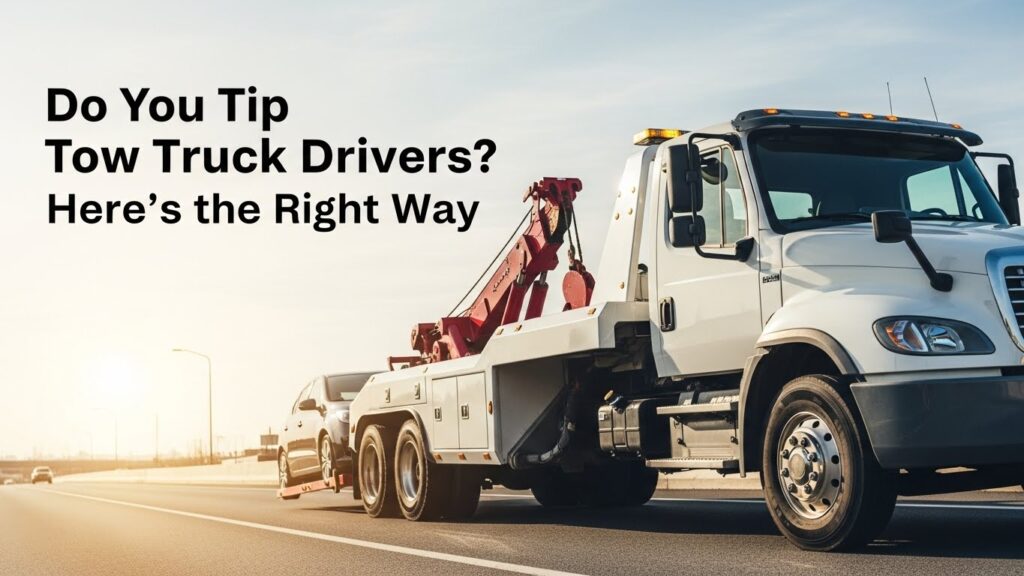
Do You Tip Tow Truck Drivers?

Blog Do You Tip Tow Truck Drivers? December 4, 2025 admin When a tow truck operator shows up during a breakdown, flat tire, or accident, many drivers start wondering if tipping is part of the etiquette. While giving a tip can feel like a natural way to acknowledge great service, most people aren’t sure whether it’s expected. The truth is that tipping practices vary based on the situation, where you live, and how you personally evaluate the help you received. This guide breaks down the unwritten rules of tipping tow truck drivers, the factors that may influence your choice, and how you can show appreciation appropriately. Tow Rankers is all about helping drivers understand the towing world better, so let’s unpack this topic clearly. Having worked with towing businesses across the country, Tow Rankers has mastered the art of building Google Ads campaigns that consistently generate real, high-intent leads. Let’s explore why Google Ads are so essential for towing companies, and how our specialized approach drives measurable growth. Tipping Isn’t Mandatory — But It’s Definitely Welcome In the towing and roadside industry, tips are not a requirement. Tow truck drivers do not rely on them, and you’re never obligated to offer one. However, many drivers appreciate the gesture because their job often puts them in unpredictable, demanding conditions. From standing on the shoulder of busy highways to working through heavy rain or freezing temperatures, they step in when you need support the most. If a driver truly impresses you or makes a stressful experience easier, a tip is a thoughtful way to acknowledge that effort. Immediate Customer Intent Google Ads allows towing businesses to target people who are actively searching for urgent services like “tow truck near me,” “jumpstart service,” or “24/7 towing.” Instead of spending money on broad advertising, you’re focusing on people who are ready to call right this second. Emergency Response Visibility Since towing requests peak during breakdowns, collisions, and late-night emergencies, it’s crucial to appear instantly. Google Ads lets Tow Rankers help you capture those urgent, high-value searches by optimizing for after-hours traffic, weather-related spikes, and other real-time fluctuations. Local Market Domination Every mile matters in towing. With advanced location targeting, towing companies can show ads only to people within specific highways, neighborhoods, or service zones. Tow Rankers uses hyper-local mapping and traffic trend data to ensure your ads appear exactly where demand is highest. Data-Driven Optimization Today’s most profitable towing companies rely on accurate data to understand which ads bring in real calls. By connecting ad clicks to call logs, bookings, and revenue, Tow Rankers ensures your marketing strategy is driven by performance, not guesswork. Things to Think About Before Tipping Several elements can help you determine whether offering a tip is appropriate: Service Difficulty A simple tow from a calm parking lot is one thing. A complicated recovery in harsh weather, a tricky roadside extraction, or a high-traffic situation is very different. Professionalism & Attitude Drivers who provide reassurance, communicate well, or exceed expectations often leave a positive impression. A tip can be a great way to reflect your appreciation. Company Policy Some towing companies accept tips, while others don’t allow their employees to take them at all. It’s always a good idea to check before insisting. Your Financial Comfort Never feel pressured. Tips should always fit within your personal budget. Kindness doesn’t have to cost money. Why Many Drivers Choose to Tip Roadside Assistance According to Indeed, tow truck operators in the U.S. earn roughly $18.48 per hour on average. Some workers receive hourly wages, others work for commission, and many juggle long hours with inconsistent service calls. A lot of professionals operate independently with a single truck, meaning they must rely solely on their workload to stay financially afloat. While $18.48 may look like a strong wage at first glance, there’s more behind the scenes. Not every driver earns that amount, and breakdowns don’t happen on a predictable schedule. Many operators only get paid when jobs come in, which means slow days, and slow weeks, are common. These realities are part of the reason many customers feel that a small tip is deserved. Beyond finances, here are a few other motivations: It’s Rare in Their Line of Work Towing isn’t like food service or hospitality where tipping is expected. Roadside professionals don’t ask for tips, so receiving one can genuinely brighten their day, even when company policy doesn’t allow them to accept it. They Truly Earn It Roadside teams often brave harsh weather, late-night calls, and dangerous traffic conditions. Their job is physically demanding and potentially risky, especially when assisting drivers on major roads. Their Help Often Feels Personal When a tow truck gets you out of a stressful situation, the relief can feel priceless. Whether you’re trying to get to work, make it to an event, or simply get home safely, the service often carries emotional weight. For many people, saying “they’re paid already” doesn’t feel like enough acknowledgement. Despite how rarely the question is asked—“Should you tip a tow truck driver?”—it’s understandable why so many motorists choose to give a little extra. How Much Should You Tip Tow Truck Drivers? There’s no universal tipping standard for the towing industry. Still, many customers choose to give $5 to $10 for routine tows or lockout services. Larger amounts may be appropriate if: The driver handled a difficult recovery Extra services were provided The driver demonstrated exceptional care The situation required more time or distance than expected Ultimately, the decision is yours, but even a small gesture is meaningful. Other Ways to Show Appreciation Don’t have cash on hand? You can still express gratitude in ways that matter. For example: Offer a cold bottle of water, especially during hot days. Leave a positive review for the towing service online. Recommend dependable companies, like Tow Rankers’ trusted towing partners, to family or friends who may need help in the future. These gestures go a long way and support hardworking roadside professionals. Frequently Asked

how-much-does-it-cost-to-tow-a-car
BLOG

How Much Does It Cost to Tow a Car?

Blog How Much Does It Cost to Tow a Car? December 4, 2025 admin Understanding the cost of towing a vehicle in 2025 doesn’t have to be complicated. When you trust a dependable towing provider like Tow Rankers, getting clear, fair, and affordable pricing becomes straightforward. Because vehicles can fail without warning, having an accurate idea of what it may cost to move your car safely to a repair shop is incredibly important. Every towing situation is different. The terrain, distance, type of vehicle, and equipment needed can change the final price. Without reviewing the exact circumstances, offering a fixed cost can be challenging. Still, knowing which factors influence pricing will help you prepare and avoid surprises. Before calling for a tow, it’s always wise to check whether your auto insurance includes roadside assistance; if it does, your tow may be entirely covered. If not, the following breakdown will help you understand how much it costs to tow a car and what affects the final bill. When Do You Need Car Towing Services? If your car leaves you stranded, damaged, or unable to move, it’s important to stay calm, get out of harm’s way, and call a professional. Below are some common situations where drivers often need towing assistance: A Flat Tire Many drivers carry a spare tire but hesitate to change it in unsafe or unfamiliar areas. Others worry about lifting the car incorrectly or not securing it properly. In such cases, calling a professional is the safer choice, and it also means knowing what a tow might cost if the tire can’t be replaced roadside. Starter or Alternator Failure A sluggish start can point to a failing starter, while flickering lights or electrical issues may signal alternator trouble. A roadside technician can determine the actual cause, but if the car can’t run, towing becomes necessary. Battery or Brake Problems A weak battery might only need a jump start, but if your cables don’t work or the problem reoccurs, it may require a tow. Likewise, any sign of brake malfunction is an immediate safety concern that calls for expert assistance. Engine Trouble Engine issues almost always require professional diagnosis. Unless you’re equipped with the tools and expertise, towing your car to a qualified mechanic is the safest step. Stuck in Mud or Off-Road Whether you got caught in muddy backroads or became trapped during severe weather, specialized equipment may be required to free your vehicle. Tow Rankers can reach you wherever you are. Locked Out of Your Vehicle If your keys are inside the car, or missing entirely, a tow professional can help unlock the vehicle or transport it if necessary. This is a common issue many drivers experience. Each of these situations can influence how much it costs to tow a car, but they are not the only factors. Understanding the full picture helps you plan ahead. What Affects the Price of a Tow? Towing costs vary widely based on several elements. Below are the most influential factors: 1. Vehicle Type The make and model of your vehicle significantly affect the overall cost. Small cars are generally the least expensive to tow due to their lighter weight. SUVs, vans, and trucks typically cost more because they require stronger equipment. Luxury or low-profile vehicles often require flatbed towing to avoid damage, which raises the price. Electric vehicles (EVs) involve special handling and may incur additional fees. 2. Towing Method Different towing methods come with different price points: Flatbed Towing The safest option, especially for long distances or high-value vehicles. Since the entire vehicle sits on a platform, it eliminates contact with the road, but it also comes at a higher cost. Hook-and-Chain Towing An older technique generally used for severely damaged or junk vehicles. It’s usually cheaper but not recommended for most modern cars. Wheel-Lift Towing A more affordable alternative that lifts two wheels off the ground. Efficient for short distances but not ideal for AWD or 4WD systems. 3. Distance Tow rates usually include a base fee, followed by a per-mile charge. For instance, if a towing company charges $5 per mile, a 50-mile tow could total around $250 in mileage alone, on top of the hook-up fee. Some companies include the first few miles at no additional cost. Long-distance towing can become expensive, which is why many drivers consider vehicle transport services for extended relocations. 4. Time of Service After-hours, weekend, holiday, or emergency towing often carries additional fees. Charges can increase anywhere between $25 to $100 depending on demand, weather, and labor conditions. Knowing these factors gives you a clearer understanding of what to expect when calculating how much it costs to tow a car in 2025. Average Towing Costs in 2025 According to national averages, the cost to tow a vehicle is approximately $109. However, this number changes depending on the vehicle, distance, time of day, and towing method. Average Towing Cost Per Mile Here are common mileage-based towing ranges: $35 – $125 for the first 5 miles or less $125 – $275 for up to 40 miles $600+ for tows reaching 100 miles These numbers are estimates and vary based on location and specific service requirements. Towing Costs by Vehicle Type and Situation The price of towing can fluctuate based on the type of vehicle and complexity of the situation: Standard Cars Local towing for compact vehicles generally ranges from $75 to $125 for 5–10 miles. SUVs, Trucks, and Vans Because of their larger size, local towing usually falls between $100 to $200. Motorcycles Towing a motorcycle is typically less expensive at $50 to $100, though flatbed services may increase the cost slightly. Luxury or Exotic Cars High-end vehicles require careful handling and specialized equipment, with prices averaging $150 to $300. Heavy-Duty Vehicles RVs, large commercial trucks, and oversized vehicles require advanced towing units, with prices beginning around $300 and often exceeding $1,000 depending on complexity. Tow Rankers: Your Trusted Towing Partner At Tow Rankers, every tow is handled with precision, safety, and

google-ads-for-towing-companies
BLOG

Google Ads for Towing Companies: How Tow Rankers Turns Clicks Into High-Value Cash Calls

Blog Google Ads for Towing Companies: How Tow Rankers Turns Clicks Into High-Value Cash Calls December 4, 2025 admin The towing industry moves fast — and if your company isn’t showing up when a stranded driver pulls out their phone, you’re losing valuable opportunities by the minute. Google Ads has become one of the most powerful ways for towing businesses to capture urgent calls, increase visibility, and secure consistent revenue. But results don’t happen by accident. They come from strategy, precision, and expertise. Having worked with towing businesses across the country, Tow Rankers has mastered the art of building Google Ads campaigns that consistently generate real, high-intent leads. Let’s explore why Google Ads are so essential for towing companies, and how our specialized approach drives measurable growth. Why Google Ads Matter for Towing Companies? Towing is unlike any other service industry. Drivers aren’t browsing casually; they’re in trouble and need help right now. That’s exactly why Google Ads works so well: it puts your business in front of people at the exact moment they need assistance. Immediate Customer Intent Google Ads allows towing businesses to target people who are actively searching for urgent services like “tow truck near me,” “jumpstart service,” or “24/7 towing.” Instead of spending money on broad advertising, you’re focusing on people who are ready to call right this second. Emergency Response Visibility Since towing requests peak during breakdowns, collisions, and late-night emergencies, it’s crucial to appear instantly. Google Ads lets Tow Rankers help you capture those urgent, high-value searches by optimizing for after-hours traffic, weather-related spikes, and other real-time fluctuations. Local Market Domination Every mile matters in towing. With advanced location targeting, towing companies can show ads only to people within specific highways, neighborhoods, or service zones. Tow Rankers uses hyper-local mapping and traffic trend data to ensure your ads appear exactly where demand is highest. Data-Driven Optimization Today’s most profitable towing companies rely on accurate data to understand which ads bring in real calls. By connecting ad clicks to call logs, bookings, and revenue, Tow Rankers ensures your marketing strategy is driven by performance, not guesswork. Types of Google Ads Campaigns for Towing Businesses Choosing the Right Strategy to Increase Calls & Conversions Search Ads Search ads display at the top of Google results when someone types in a keyword you’re targeting. Though the cost-per-click may be higher, these ads usually bring the strongest conversion rates because they connect you with people ready to take immediate action. Display Ads Display ads are visually engaging banners placed across Google’s partner websites. They’re excellent for increasing brand awareness, retargeting website visitors, or reinforcing your company name across your service area. Shopping Ads Shopping ads are mainly for e-commerce, but towing companies selling equipment or accessories (like tow straps or roadside kits) may use them through Merchant Center feeds. Local Ads Local Ads and Local Service Ads help towing companies appear in map listings and positions reserved for Google Guaranteed providers. These placements are powerful for high-intent local searches. Remarketing Ads Remarketing campaigns target people who visited your site but didn’t convert. Perfect for reminding someone to request a quote, call back, or complete a service inquiry. Performance Max Ads Performance Max campaigns allow Tow Rankers to run ads across Search, Display, Maps, YouTube, and Discover simultaneously. This unified strategy often leads to lower costs and stronger overall performance. What To Do After Your Google Ads Start Running Choosing the Right Strategy to Increase Calls & Conversions Search Ads Search ads display at the top of Google results when someone types in a keyword you’re targeting. Though the cost-per-click may be higher, these ads usually bring the strongest conversion rates because they connect you with people ready to take immediate action. Display Ads Display ads are visually engaging banners placed across Google’s partner websites. They’re excellent for increasing brand awareness, retargeting website visitors, or reinforcing your company name across your service area. Shopping Ads Shopping ads are mainly for e-commerce, but towing companies selling equipment or accessories (like tow straps or roadside kits) may use them through Merchant Center feeds. Local Ads Local Ads and Local Service Ads help towing companies appear in map listings and positions reserved for Google Guaranteed providers. These placements are powerful for high-intent local searches. Remarketing Ads Remarketing campaigns target people who visited your site but didn’t convert. Perfect for reminding someone to request a quote, call back, or complete a service inquiry. Performance Max Ads Performance Max campaigns allow Tow Rankers to run ads across Search, Display, Maps, YouTube, and Discover simultaneously. This unified strategy often leads to lower costs and stronger overall performance. What To Do After Your Google Ads Start Running Simple, Effective Practices to Maximize Your Results Below are the instructions you can follow after launching your campaigns: 1. Review Your Ad Status Regularly Make sure every ad is active, approved, and appearing where expected. Status changes can limit your visibility, so monitoring performance ensures your account stays in peak condition. 2. Use Keyword Planner for New Ideas Google’s Keyword Planner helps you uncover new towing-related search terms and estimate search volumes. This allows you to expand your reach and refine your campaigns with fresh opportunities. 3. Build a Strong Negative Keyword List Negative keywords prevent your ads from showing to irrelevant searchers. Over time, a well-built list protects your budget and ensures you attract only callers who genuinely need your towing services. 4. Track Performance Metrics Frequently Monitoring impressions, clicks, call volume, and conversions helps you understand what’s working. Consistent performance reviews reveal opportunities for optimization and growth. 5. Understand Customer Search Intent Matching your ads to the real needs of your audience builds trust and improves click-through rates. When your messaging aligns with search intent, your towing company becomes the obvious choice. Why Choose Tow Rankers for Your Google Ads Strategy? Tow Rankers isn’t a general marketing agency; we specialize exclusively in towing and roadside assistance. Our strategies are built around the realities of high-urgency service

how-much-does-a-tow-truck-cost
BLOG

How Much Does a Tow Truck Cost?

How Much Does a Tow Truck Cost? When your vehicle suddenly refuses to move, whether due to a breakdown, collision, or unexpected mechanical trouble, it’s natural to panic about both the inconvenience and the cost of getting help. Searching “tow truck towing service cost near me” often shows a broad range of prices, leaving most drivers unsure of what a fair rate actually looks like. At Tow Rankers, we specialize in gathering real-world towing data, comparing industry standards, and breaking down complex pricing structures so drivers know exactly what to expect. This guide gives you a clear, easy-to-understand explanation of towing costs, tow truck types, pricing factors, and smart ways to avoid being overcharged. How Much Is a Tow Truck? Price Breakdown by Type Flatbed Tow Trucks (Rollback Trucks) Flatbeds are widely used for safe, damage-free transport. A long hydraulic bed tilts toward the ground so vehicles can be fully lifted off the road. They are the go-to option for long-distance towing and vehicles that cannot be driven. Price to Own This Truck: $55,000 – $120,000 Ideal For: Expensive cars, heavily damaged vehicles, long hauls Wrecker Tow Trucks Although many people use the word “wrecker” generically, it actually refers to a specific type of tow truck designed for recoveries. These trucks are equipped with a boom and winch system capable of lifting or pulling vehicles from ditches, tight spots, or accident scenes. Price to Own This Truck: Varies by weight class Ideal For: Hard recoveries, trucks, buses, and heavy-duty jobs Tow Trucks With Slide-In Wheel Lifts Wheel-lift attachments transform a standard pickup into a capable towing unit. The metal yoke grabs the front or rear wheels for short-distance towing. This setup is extremely useful for repossessions, tight parking lots, or areas with low clearance. Price to Own This Truck: $40,000 – $60,000 Ideal For: Light-duty towing, short distances, confined spaces Integrated Tow Trucks Integrated trucks combine wheel-lift and boom capabilities in a single reinforced unit. This makes them more stable and powerful, especially when handling oversized or commercial vehicles. Price to Own This Truck: $75,000 – $150,000 Ideal For: Larger vehicles, construction equipment, semi recovery Rotator Tow Trucks Rotators are among the most advanced tow trucks in the industry. The giant rotating boom makes it possible to lift overturned trucks, handle extreme recoveries, and work in tight highway conditions where space is limited. Price to Own This Truck: $400,000 – $850,000 Ideal For: Complex accident recovery, heavy-duty towing, industrial jobs Hook-and-Chain Tow Trucks These older-style tow trucks rely on chains to pull or lift the vehicle. Because the chains can damage the frame or body, they are rarely used for modern cars. However, they remain useful for scrapped or totaled vehicles. Price to Own This Truck: $30,000 – $50,000 Ideal For: Junk cars, heavily damaged vehicles, salvage work Common Tow Truck Charges While Towing: What Your Bill Usually Includes Base Hook-Up Fee Most towing services begin with a standard hook-up charge. This covers the cost of securing your vehicle and includes the first few miles. In big metropolitan areas, the hook-up fee tends to be higher, while smaller towns usually charge less. Per-Mile Charges Once the included mileage is used up, companies begin charging per mile. This varies widely depending on location, tow truck size, and the type of vehicle being transported. Additional Charges You Might Encounter Some jobs require more labor, time, or equipment. These situations increase the overall cost: Winching: $50–$150 depending on severity Vehicle Storage: $20–$50 per day After-Hours or Holiday Service: $50–$100 surcharge These extras can stack up quickly, which is why it’s important to ask questions before agreeing to a tow. What Factors Affect Tow Truck Prices? Tow truck pricing isn’t random; several factors determine how much you end up paying. Here’s a cleaner, more streamlined breakdown: 1. Distance Traveled Longer tows cost more because both fuel and labor increase with distance. Luxury or vintage vehicles may also include a handling surcharge. 2. Time of Day Calls made outside regular business hours, late evenings, early mornings, weekends, and holidays, typically come with an additional fee. Accident-related requests can trigger emergency surcharges. 3. Weekend or Holiday Requests Non-business days require additional staffing and equipment availability. This results in flat-rate weekend or holiday surcharges added to the base fee. 4. Vehicle Accessibility If your vehicle is stuck in mud, snow, a ditch, or a tight location, special equipment may be required. This increases both labor time and cost. 5. Vehicle Size and Type The larger or heavier the vehicle, the more specialized the tow truck needs to be. Tow Rankers data shows: Sedans cost the least SUVs and vans cost more Heavy-duty trucks and machinery cost significantly more Motorcycles tend to cost less Luxury, vintage, or exotic cars typically require flatbed towing and extra precautions 6. Type of Tow Truck Required Flatbeds, rotators, and heavy-duty wreckers carry higher operational costs. The more advanced the truck, the higher the service rate. How to Avoid Overpaying for Towing Services Check Your Auto Insurance Many providers include roadside assistance or towing reimbursements. One phone call could save you most, or all, of the cost. Research Companies in Advance Comparing towing rates before you actually need help ensures you’re not stuck paying inflated emergency prices. Beware of Predatory Tow Trucks To protect yourself: Always ask for an estimated price Confirm the company name and licensing Avoid unsolicited tow trucks showing up at accident scenes Consider Roadside Assistance Memberships Services and memberships can drastically reduce towing costs, especially if you drive often or long distances. Need Reliable & Affordable Roadside Assistance? Stay protected on every drive with Tow Rankers Roadside Support, your dependable partner when unexpected vehicle issues arise. By joining our community, you gain instant access to a complete set of benefits designed to keep you safe, prepared, and stress-free on the road. 24/7 Nationwide Towing Assistance Wherever you are, our trusted towing partners are only a call away, day or night. Help reaches you fast when you need it

how-to-tow-a-car-with-a-car
BLOG

How to Tow a Car with a Car? A Complete Tow Rankers Guide

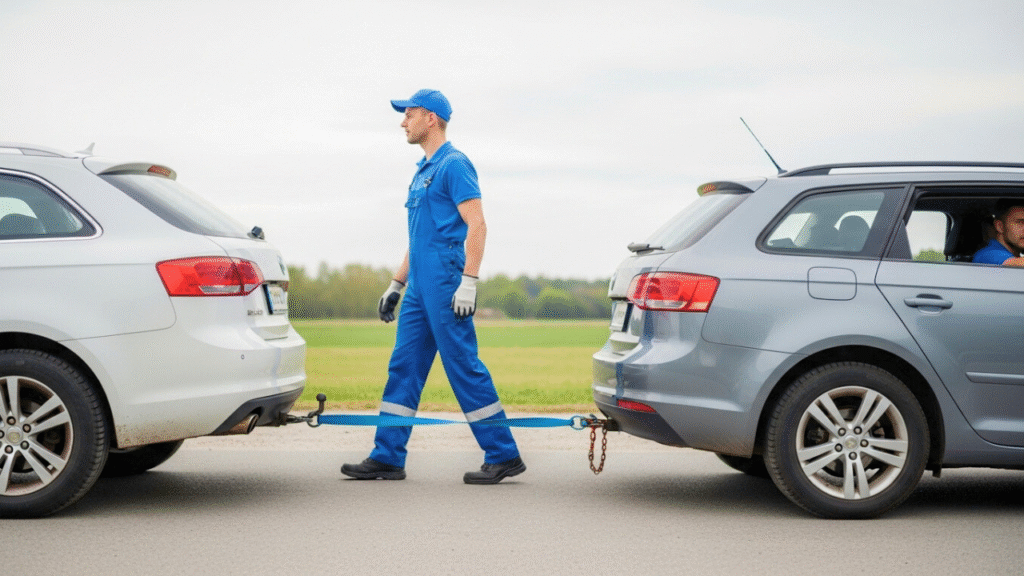
Blog How to Tow a Car with a Car? A Complete Tow Rankers Guide November 19, 2025 admin Most drivers know that the safest way to move a disabled vehicle is by using proper towing equipment, like a tow truck or a truck-and-trailer setup. But real life doesn’t always cooperate. Maybe you’re stuck in a remote area, your roadside assistance has expired, or professional towing simply isn’t an option at the moment. When you must rely on another car for help, the question becomes: is towing with a regular vehicle safe—and how is it done correctly? In this Tow Rankers guide, we break down everything you need to know: how to determine if towing is even possible, understanding tow limits, choosing the right towing gear, the different towing methods, smart driving practices, and what can go wrong if proper procedures aren’t followed. Key Safety Checks Before You Start Towing Tow Rope Length Can’t Exceed 4.5 Meters Your tow rope must stay under the legal limit of 4.5 meters; otherwise, you risk fines and safety hazards. If the rope stretches beyond 1.5 meters, attach a bright cloth or high-visibility marker so approaching drivers can clearly spot the connection. Choose a Suitable Tow Vehicle Always tow with a vehicle heavier and more powerful than the one being pulled; this ensures better control and braking stability. Check your owner’s manual for the maximum towing capacity to avoid damaging your engine, suspension, or transmission. Display an “On Tow” Sign The rear vehicle must show an “On Tow” sign so surrounding drivers know the car isn’t moving under its own power. Failing to display this sign may not only result in penalties but also put you at a higher risk since other motorists won’t anticipate restricted maneuverability. The Driver in the Towed Vehicle Must Be Licensed Even though the car isn’t running, a qualified driver is required behind the wheel to steer and brake when needed. An unlicensed or inexperienced driver can easily lose control since steering and braking responsiveness are reduced. Lights Must Be On at Night or in Poor Visibility Both vehicles need working lights to stay visible in the dark, fog, rain, or any low-visibility conditions.If the disabled car can’t power its lights due to an electrical failure, you should call for professional help instead of towing it yourself. Ignition Should Be Turned to “On” Setting the ignition to “on” releases the steering lock so the wheels can follow the towing vehicle naturally. Be prepared for a heavier steering effort because power steering won’t function without the engine running. The Towed Vehicle Must Be in Neutral Shifting the broken-down vehicle into neutral allows the wheels to move freely without placing strain on the engine. Towing a car while it’s in gear can cause catastrophic internal damage, turning a simple breakdown into a costly repair. Review the Manual before Towing an Automatic Automatic transmissions often have distance and speed restrictions when being towed with wheels on the ground. Ignoring these guidelines can overheat or destroy the transmission, so always check the manufacturer’s instructions first. Tow Bars Are Safer Than Ropes Tow bars provide rigid, stable control and reduce the risk of snapping under tension, making them safer for both drivers. While ropes are cheaper and still commonly used, they require more caution and are better suited for short, local recovery. SORN Vehicles Cannot Be Towed on Public Roads A car declared SORN (Statutory Off Road Notification) legally cannot touch public roads, not even for towing. If you purchase a non-running vehicle marked as SORN, you’ll need a trailer or professional transport to move it legally. Different Ways to Tow One Car with Another 1. Towing a Car With a Rope or Chain This should only be used for short, low-speed trips on local roads. Avoid using weak, worn, or improvised ropes. Keep the distance appropriate—too long or too short creates safety risks. Brake gently to prevent the towed car from rolling into the towing vehicle. 2. Towing With a Dolly A tow dolly lifts the front wheels of the disabled car off the ground, reducing wear and preventing “push” during braking. It’s lightweight, simple to operate, and widely available for rent, making it a popular option for car-to-car towing. 3. Towing a Car with a Tow Bar Tow bars attach directly to the front of the disabled vehicle and connect to the towing vehicle’s hitch. Safety chains are mandatory. Tow bars work well but can cause rear-vehicle “push” in turns, so drive cautiously. 4. Using a Car Trailer If safety is the priority, a full car trailer is the best method. The entire vehicle rests on the platform, removing road contact altogether. However, this setup requires a proper truck; regular passenger cars lack the capacity for such heavy loads. How to Tow a Car: An Easy-to-Follow Process? Step 1: Prepare Both Vehicles Verify the tow vehicle’s capacity and inspect both vehicles for mechanical issues, tire pressure, and working lights. Step 2: Select the Right Equipment Choose a rope, chain, dolly, or tow bar suitable for distance and terrain, then attach it to the designated tow points only. Step 3: Align the Vehicles Position both cars in a straight line and keep enough space to prevent jerking or excessive tension on the tow line. Step 4: Shift to Neutral Place the towed car in neutral and release its parking brake so the wheels can rotate freely. Step 5: Accelerate Smoothly Start gently, avoid sudden braking, and maintain slow speeds, typically under 25 mph. Step 6: Use Communication Signals Drivers should maintain constant communication using signals or walkie-talkies, and both cars should use hazard lights when needed. Step 7: Inspect Regularly Stop periodically to check the tow connection and ensure the towed vehicle isn’t overheating or making unusual noises. FAQs   Final Thoughts Towing a car with another vehicle is possible, but it requires preparation, the right equipment, and safe driving habits. When done incorrectly, it can cause costly damage or dangerous accidents. By

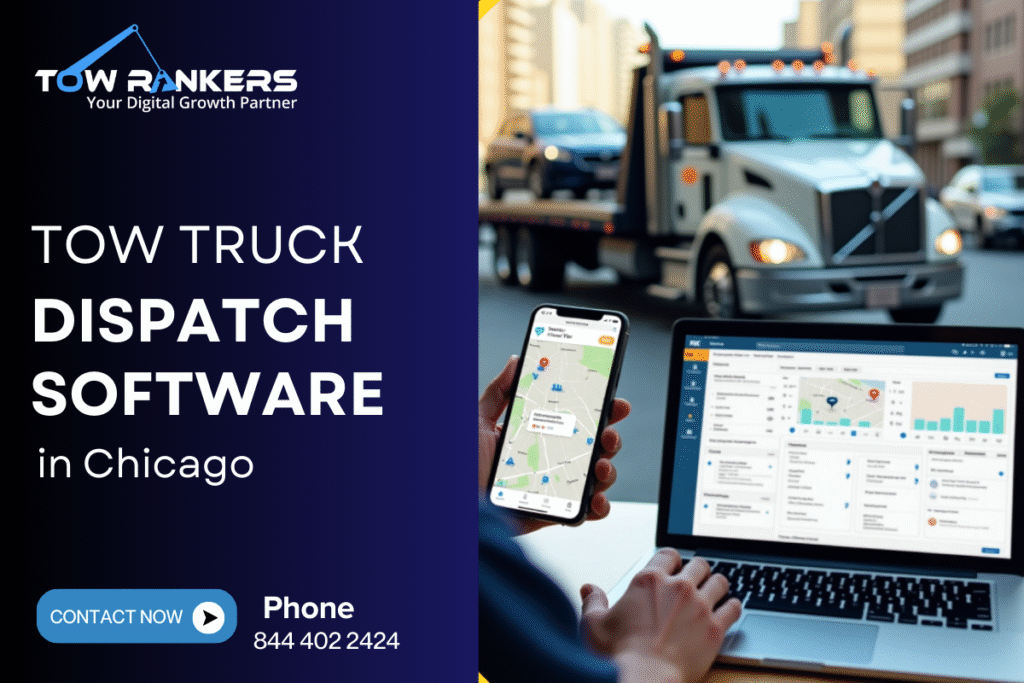
Tow truck dispatch software in the USA by Tow Rankers – the ultimate solution for efficient towing business operations.
BLOG

The Best Tow Truck Dispatch Software in the USA: Why Tow Rankers Is the Game-Changer

Blog The Best Tow Truck Dispatch Software in the USA: Why Tow Rankers Is the Game-Changer August 26, 2025 admin Running a towing business today demands more than just reliable trucks and trained drivers; it requires smart, efficient tools that streamline dispatching, boost team productivity, and elevate customer satisfaction. That’s where Tow Rankers comes in. Whether you’re a small operation or managing multiple fleets across Chicago or anywhere in the U.S., our software is designed to meet your unique needs. Let’s dive into how the best tow truck dispatch software in the USA can help businesses thrive. Unlocking the Full Potential of Towing Dispatch Software With the right platform in place, towing companies can transform how they operate. Tow Rankers enables you to gain full control of your business by: By adopting towing software built for small businesses and growing fleets alike, you gain not only speed and control but also a competitive edge in today’s fast-moving market. Smarter Dispatching at Your Fingertips Gone are the days of manual dispatch calls and spreadsheet chaos. Tow Rankers uses smart logic and live data to assign jobs automatically based on vehicle type, distance, availability, and service type. This ensures faster response times and a better customer experience — a key reason we’re rated among the best tow truck management software in Chicago and beyond. Live Location Tracking in Real Time With integrated GPS functionality, you can monitor every vehicle in your fleet from a single dashboard. This feature lets you track tow trucks live on the map, reducing response time and increasing operational efficiency. It also helps you provide accurate ETAs to customers, enhancing reliability and trust. Fleet Management Made Simple Keeping your fleet in top condition is easy with our CRM. Schedule preventive maintenance, track fuel usage, and analyze driver performance all in one place. By staying on top of your fleet health, you reduce downtime, increase safety, and boost productivity. Real-Time Notifications Keep Everyone in Sync From dispatch to drop-off, both your customers and team stay updated every step of the way. Tow Rankers sends out automatic SMS and email alerts for job status, driver location, estimated arrival times, and more, ensuring transparency and timely communication across the board. Dynamic Workflow Customization Not all towing companies operate the same way, and we get that. Tow Rankers gives you the flexibility to build workflows that mirror your business model. From job intake to payment processing, you can tailor every step to suit how your best towing company management software in the USA for businesses seeking adaptability and growth. Powerful Invoicing & Payment Integration Managing payments and billing can be one of the most time-consuming parts of a towing operation. With Tow Rankers, it’s effortless. Generate invoices automatically, accept digital payments, and merge multiple services under one bill when needed — perfect for high-volume clients or repeat service contracts. Centralized Order Management Platform Handle all your towing requests, from emergencies to scheduled pickups, within a single platform. Assign jobs, manage timelines, and track operator availability without toggling between systems. Our unified approach to dispatching and order processing streamlines coordination and improves overall service delivery. Track Every Team Member with Precision With advanced tracking and logging tools, you gain deep visibility into your team’s daily activities. Monitor job completions, review historical performance, and ensure your crew is staying on-task and on-time. With better oversight comes improved accountability and resource management. Automated Client Communication, Done Right Stay connected with your customers without lifting a finger. Tow Rankers automates key communications like appointment reminders, arrival notifications, and service updates through or integrated email and SMS. This not only saves time but also helps reinforce professional, consistent service. Towing-Focused Reporting & Business Intelligence Make smarter decisions with access to detailed analytics covering everything from average response times to individual driver metrics. Identify bottlenecks, optimize performance, and track key performance indicators (KPIs) that matter most to your success. Built for Drivers, Trusted by Dispatchers Our platform doesn’t just benefit managers; drivers love it too. With a mobile-friendly interface, they receive job details and complete damage waivers all on the go. Lightweight, battery-friendly, and easy to use, it empowers your crew to work efficiently without distraction. Why Tow Rankers Stands Out We’ve designed our CRM with towing professionals in mind, whether you’re a one-truck business or a multi-state operator. That’s what makes us one of the best towing software providers for small businesses and large operations alike. Tow Rankers combines cutting-edge features, flexible pricing, and ongoing support to ensure your towing company runs smoother than ever. Experience the Difference — Start Your Free Trial Today Ready to streamline operations, save time, and improve customer satisfaction? Discover why Tow Rankers is the go-to towing dispatch software in the USA. Try it today and see firsthand how the right technology can take your towing business to the next level.  

AI voice bot for towing company customer support in Chicago, USA – virtual assistant answering service illustration
BLOG

How AI Voice Bots Are Transforming Towing Companies in Chicago, USA

Blog How AI Voice Bots Are Transforming Towing Companies in Chicago, USA August 5, 2025 admin Operating a towing company in a bustling city like Chicago requires more than just trucks and dispatchers; it demands precision, speed, and round-the-clock availability. For drivers stranded on the Dan Ryan Expressway or businesses scheduling fleet tows, immediate assistance is not just expected; it’s essential. That’s where the AI voice bot for towing companies in Chicago, USA comes into play. As customer expectations rise, towing businesses are turning to advanced voice automation to ensure no call is missed, no query is left unanswered, and every service request is handled efficiently. This shift is not only a convenience but a necessary step toward staying competitive in an increasingly digital market. Let’s examine how voice automation solutions in Chicago are helping towing companies provide faster, more reliable service while improving their bottom line. What Is an AI Voice Bot and Why Does It Matter for Towing Companies? An AI voice bot is a voice-based customer service assistant that uses artificial intelligence to manage incoming calls. Unlike traditional answering services, AI voice bots can comprehend natural speech, handle multiple calls simultaneously, and are available 24/7 without human oversight. For a towing company operating in a high-demand area like Chicago, this means: In a business where timing is crucial, an AI voice agent for towing services becomes a vital extension of your customer service operation. Benefits of AI Voice Bots for Chicago-Based Towing Businesses Never Miss a Call—Even After Hours Calls can come at any hour, often when staff capacity is limited. A voice bot in Chicago, USA, ensures your business is always responsive. Whether a driver needs immediate roadside assistance at 3 a.m. or a commercial client calls on a holiday, the bot is ready to answer, gather key details, and initiate the next steps. Fully Customizable to Your Business Workflow No two towing operations are the same. A custom voice bot agent in Chicago can be configured to reflect your specific services, operational hours, service zones, and communication preferences. From junk car removal to emergency towing, the voice bot can triage calls and follow logic aligned with your internal workflow. Natural Conversations That Feel Human Modern voice bots have evolved significantly. With natural language processing (NLP), your AI assistant can carry on smooth, natural-sounding conversations. It listens, responds appropriately, and even handles follow-up questions with clarity. The result is a professional, reassuring experience for callers—without the frustration of long hold times. Scalable and Cost-Effective When demand spikes, due to weather, accidents, or seasonal surges, your human staff can only do so much. An AI answering service for towing companies in Chicago allows you to scale your communication capabilities without increasing overhead. It’s a practical, budget-friendly approach to managing peak call volumes and improving lead capture rates. Tow Rankers: Leading the Charge in AI Voice Automation for Towing At Tow Rankers, we understand that towing businesses require solutions tailored to their unique needs, not generic tools. As one of the top AI voice bot agencies in Chicago, we deliver systems that are reliable, intuitive, and tailored to the demands of the towing industry. Our voice automation services include: Custom Voice Bot Development We take the time to understand your services and processes to deliver a solution that aligns with your business goals. Natural Language Processing (NLP) Every bot is designed to sound professional and approachable, with the ability to understand different speech patterns and regional accents. CRM & Call Tracking Integration All captured data is automatically logged in your CRM, enabling better follow-ups and more accurate reporting. Live Agent Escalation If the inquiry is urgent or complex, the bot instantly routes the call to your dispatcher or team member—no delay, no confusion. 24/7 Setup & Monitoring We handle performance optimization and support, so your system continues to improve with use. Whether you operate a one-truck business or a multi-location fleet, our AI voicebot agent services in Chicago are designed to help you respond faster, convert more leads, and grow with confidence. AI Voice Assistant vs. Traditional Answering Services Feature Traditional Answering Services AI Voice Assistant Availability Limited to business hours or after-hours agents Available 24/7/365 Cost Typically billed per call or via hourly rates Predictable monthly cost Scalability Constrained by human resources Instantly scalable Data Integration Requires manual input and logging Seamlessly integrates with CRM Customer Experience Varies by agent; prone to error or delay Fast, consistent, and accurate Industries Already Embracing Voice Automation Voice automation isn’t limited to towing. In Chicago and beyond, service-driven industries are adopting this technology to elevate their customer experience. These include: For towing businesses, the adoption of voice automation solutions in Chicago offers a way to keep pace—and in many cases, stay ahead of competitors who rely solely on traditional methods. What Makes a Great AI Voice Bot for Your Towing Company? A reliable AI voice bot does more than answer phones. It should be: Generic voice assistants may work for some industries, but for towing, specialization is key. That’s why working with a team like Tow Rankers ensures every detail is built with your business in mind. Final Thoughts: Future-Proof Your Towing Business Today The towing industry in Chicago continues to evolve, and customer expectations are evolving with it. With an AI voice bot for towing companies in Chicago, USA, you gain the tools to operate more efficiently, serve more customers, and maintain a professional image 24/7. You don’t need to overhaul your business, just take the next smart step forward. With the right voice automation in place, you’re equipped to meet today’s demands and tomorrow’s opportunities with confidence. �� Ready to Automate Your Towing Calls? Let’s explore how AI voice technology can work for your business. Book a Free Strategy Call with Tow Rankers   

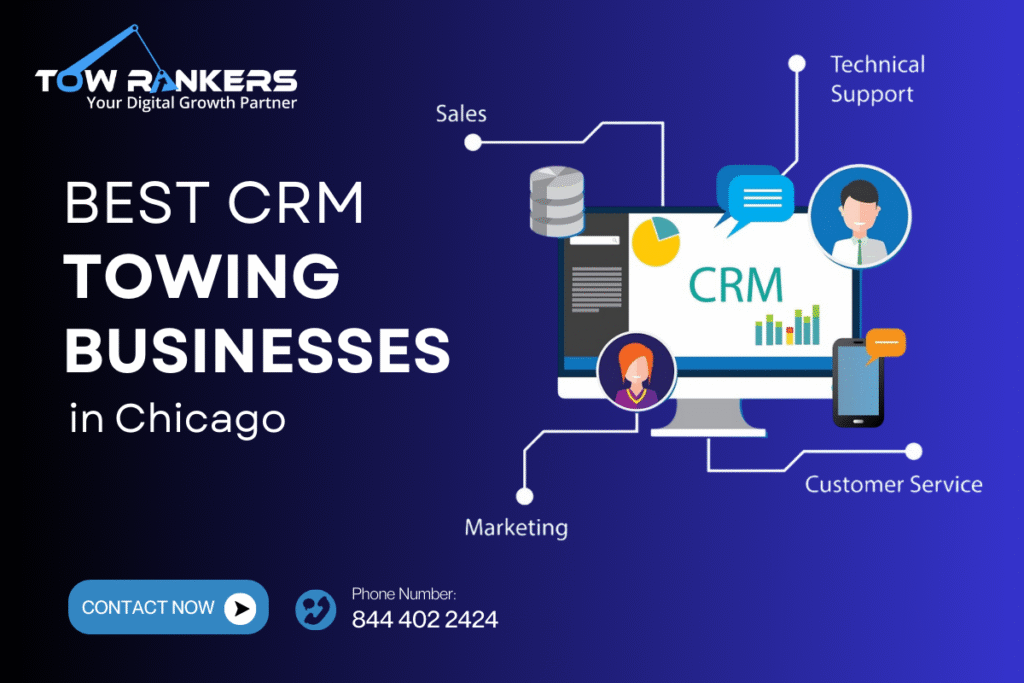
Best CRM for Towing Businesses in Chicago – Manage customers, dispatch, and operations with ease.
BLOG

Best CRM for Towing Businesses in Chicago

Blog AI Chatbots for Towing Businesses in Chicago – Duplicate – [#3932] July 7, 2025 admin Best CRM for Towing Businesses in Chicago Built for Towing Companies That Need Clarity, Speed, and Control Managing a towing business in a fast-paced city like Chicago comes with constant demands. You need to stay on top of leads, communicate clearly with customers, and make sure every job runs smoothly. That’s exactly what Tow Rankers delivers — the best CRM for towing businesses in Chicago. Whether you operate one truck or manage a growing fleet, this solution helps you capture leads, stay organized, and manage operations with confidence. Lead Generation Software Designed for Towing Companies Tow Rankers helps your team focus on what matters most — bringing in new jobs. With smart lead generation tools built right into the CRM, you’ll never have to guess where your next call is coming from. Landing Page & Funnel Builder – Create and launch branded pages without any coding Call Tracking & Source Attribution – Measure the performance of every ad, form, and call Live Web Chat & Form Integration – Start conversations with website visitors in real time Capture Leads from Facebook & Google Ads – Bring in new business directly from your ad spend If you’re searching for lead generation software for towing companies that delivers, you’ve found it. Consistent Follow-Ups, Even When You’re Off the Clock Staying in touch with every prospect is essential, especially when response time can make or break a sale. Our CRM handles this for you with reliable automation tools. Automated Messages – Stay connected with your leads at every stage Pre-Built Templates – Launch campaigns quickly with ready-to-use messages AI-Driven Responses – Ensure prompt replies, even after hours Let the system follow up so your team can focus on delivering great service. A Central Hub to Manage Every Lead and Customer Unlike generic tools, Tow Rankers CRM is built with your operations in mind. It puts all the critical information in one place, so you never lose track of a conversation, appointment, or deal. Sales Pipeline Tracking – Easily view and manage your leads through each stage Customer History & Communications – Keep all notes, calls, and messages accessible Online Scheduling – Allow clients to book services without back-and-forth calls Looking for the best CRM for a towing company in Chicago? This is the dashboard that simplifies your day-to-day. All-In-One Messaging — Never Miss a Customer Again Great service begins with reliable communication. Tow Rankers combines all your channels into one interface, making it easier to respond and connect quickly. Unified Inbox – Stay on top of all messages in one view Text Back for Missed Calls – Automatically follow up on unanswered calls Automated Review Requests – Encourage happy customers to leave reviews on Google or Facebook With our centralized messaging tools, it’s easy to stay responsive and build trust along the way. Flexible Features for Growing Towing Companies Whether you’re expanding your reach across Chicago or improving internal workflows, our CRM adapts to your business needs. Training & Membership Tools – Share internal programs or offer exclusive content Performance Tracking & Reports – Monitor leads, revenue, call volume, and job success Custom Permissions & Fields – Configure the platform to suit your team’s structure A customizable CRM for towing companies that scales as you grow. Why Chicago Businesses Prefer Tow Rankers Over Others While many towing businesses try to make platforms like Salesforce CRM work, they often end up overwhelmed by features they don’t need. Tow Rankers takes a different approach — purpose-built software that speaks your language. Made specifically for the towing industry workflows Full mobile compatibility on Android, iOS, and web Quick onboarding with expert setup support Always-on assistance with 24/7 customer service Finally, an alternative to Salesforce CRM for towing businesses in Chicago that feels built just for you. Try It Now Take advantage of our full-featured trial and experience the difference yourself. There’s no risk, no contracts, and no upfront payments. Full access to all features Set up in under an hour Personal onboarding and support included Get started with the best CRM for towing businesses in Chicago today. Your trial is just a click away — and so is a more efficient, profitable towing operation.

Scroll to Top