






[eac_elementor_tmpl id=”2717″]
Most drivers know that the safest way to move a disabled vehicle is by using proper towing equipment, like a tow truck or a truck-and-trailer setup. But real life doesn’t always cooperate. Maybe you’re stuck in a remote area, your roadside assistance has expired, or professional towing simply isn’t an option at the moment. When you must rely on another car for help, the question becomes: is towing with a regular vehicle safe—and how is it done correctly?
In this Tow Rankers guide, we break down everything you need to know: how to determine if towing is even possible, understanding tow limits, choosing the right towing gear, the different towing methods, smart driving practices, and what can go wrong if proper procedures aren’t followed.
Key Safety Checks Before You Start Towing
Tow Rope Length Can’t Exceed 4.5 Meters
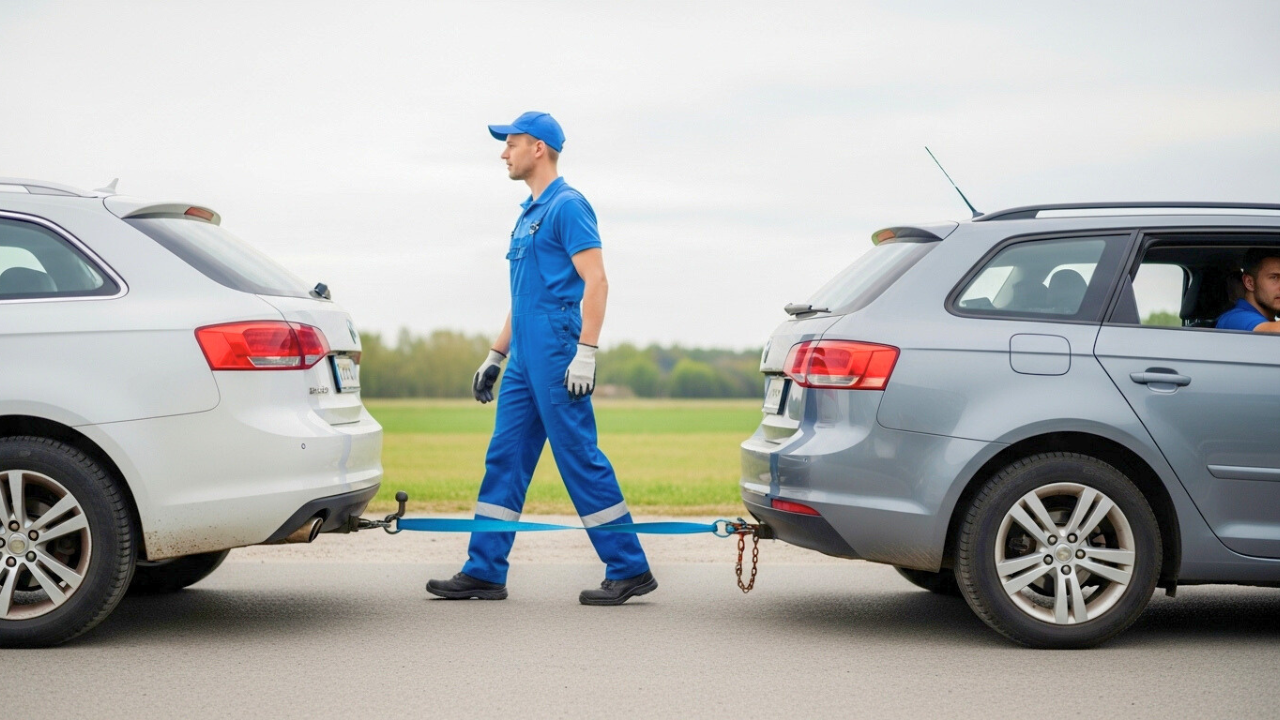
Your tow rope must stay under the legal limit of 4.5 meters; otherwise, you risk fines and safety hazards. If the rope stretches beyond 1.5 meters, attach a bright cloth or high-visibility marker so approaching drivers can clearly spot the connection.
Choose a Suitable Tow Vehicle
Always tow with a vehicle heavier and more powerful than the one being pulled; this ensures better control and braking stability. Check your owner’s manual for the maximum towing capacity to avoid damaging your engine, suspension, or transmission.
Display an “On Tow” Sign
The rear vehicle must show an “On Tow” sign so surrounding drivers know the car isn’t moving under its own power. Failing to display this sign may not only result in penalties but also put you at a higher risk since other motorists won’t anticipate restricted maneuverability.
The Driver in the Towed Vehicle Must Be Licensed
Even though the car isn’t running, a qualified driver is required behind the wheel to steer and brake when needed. An unlicensed or inexperienced driver can easily lose control since steering and braking responsiveness are reduced.
Lights Must Be On at Night or in Poor Visibility
Both vehicles need working lights to stay visible in the dark, fog, rain, or any low-visibility conditions.
If the disabled car can’t power its lights due to an electrical failure, you should call for professional help instead of towing it yourself.
Ignition Should Be Turned to “On”
Setting the ignition to “on” releases the steering lock so the wheels can follow the towing vehicle naturally. Be prepared for a heavier steering effort because power steering won’t function without the engine running.
The Towed Vehicle Must Be in Neutral
Shifting the broken-down vehicle into neutral allows the wheels to move freely without placing strain on the engine. Towing a car while it’s in gear can cause catastrophic internal damage, turning a simple breakdown into a costly repair.
Review the Manual before Towing an Automatic
Automatic transmissions often have distance and speed restrictions when being towed with wheels on the ground. Ignoring these guidelines can overheat or destroy the transmission, so always check the manufacturer’s instructions first.
Tow Bars Are Safer Than Ropes
Tow bars provide rigid, stable control and reduce the risk of snapping under tension, making them safer for both drivers. While ropes are cheaper and still commonly used, they require more caution and are better suited for short, local recovery.
SORN Vehicles Cannot Be Towed on Public Roads
A car declared SORN (Statutory Off Road Notification) legally cannot touch public roads, not even for towing. If you purchase a non-running vehicle marked as SORN, you’ll need a trailer or professional transport to move it legally.
Different Ways to Tow One Car with Another

1. Towing a Car With a Rope or Chain
This should only be used for short, low-speed trips on local roads. Avoid using weak, worn, or improvised ropes. Keep the distance appropriate—too long or too short creates safety risks. Brake gently to prevent the towed car from rolling into the towing vehicle.
2. Towing With a Dolly
A tow dolly lifts the front wheels of the disabled car off the ground, reducing wear and preventing “push” during braking. It’s lightweight, simple to operate, and widely available for rent, making it a popular option for car-to-car towing.
3. Towing a Car with a Tow Bar
Tow bars attach directly to the front of the disabled vehicle and connect to the towing vehicle’s hitch. Safety chains are mandatory. Tow bars work well but can cause rear-vehicle “push” in turns, so drive cautiously.
4. Using a Car Trailer
If safety is the priority, a full car trailer is the best method. The entire vehicle rests on the platform, removing road contact altogether. However, this setup requires a proper truck; regular passenger cars lack the capacity for such heavy loads.
How to Tow a Car: An Easy-to-Follow Process?
Step 1: Prepare Both Vehicles
Verify the tow vehicle’s capacity and inspect both vehicles for mechanical issues, tire pressure, and working lights.
Step 2: Select the Right Equipment
Choose a rope, chain, dolly, or tow bar suitable for distance and terrain, then attach it to the designated tow points only.
Step 3: Align the Vehicles
Position both cars in a straight line and keep enough space to prevent jerking or excessive tension on the tow line.
Step 4: Shift to Neutral
Place the towed car in neutral and release its parking brake so the wheels can rotate freely.
Step 5: Accelerate Smoothly
Start gently, avoid sudden braking, and maintain slow speeds, typically under 25 mph.
Step 6: Use Communication Signals
Drivers should maintain constant communication using signals or walkie-talkies, and both cars should use hazard lights when needed.
Step 7: Inspect Regularly
Stop periodically to check the tow connection and ensure the towed vehicle isn’t overheating or making unusual noises.
FAQs
Is it illegal to tow a car with another car?
Laws vary by region, but many areas allow car-to-car towing only under specific conditions, such as proper signage, legal equipment, and safe driving speed. Tow Rankers always recommends checking your local regulations to avoid fines or unsafe setups.
Can you tow a car on the road?
Yes, as long as the vehicle is insured, not registered as SORN, and capable of displaying lights and an “On Tow” sign. However, professional towing is always safer, especially for long distances.
How do you tow an automatic car?
Many automatic transmissions can only be towed short distances at low speeds unless lifted on a dolly or trailer. Always consult the owner’s manual or contact Tow Rankers for guidance to avoid transmission damage.
Is it illegal to tow a car with a rope?
Not always, rope towing is still legal in many places, but strict rules apply regarding rope length, visibility markers, and road type. It’s safest to use a tow bar or dolly whenever possible.
How do you tow a car with a tow bar?
A tow bar attaches to the disabled vehicle’s mounting points and connects to the towing car’s rear hitch. Safety chains must also be installed. Once connected, both drivers should communicate clearly and drive slowly.
How long should a tow rope be for a car?
A tow rope can’t exceed 4.5 meters. Anything over 1.5 meters must have a bright marker so other drivers can see the connection.
What is the law on towing a vehicle?
Generally, you must use approved equipment, drive at reduced speeds, display proper signage, ensure both drivers are licensed, and keep the towed vehicle legally roadworthy. Rules may differ by region.
How do you tow a car with a tow strap?
Use a heavy-duty tow strap designed for vehicle towing, attach it only to official recovery points, and avoid sudden movements. Keep speeds low and use hazard lights. Tow Rankers recommends straps only for short, local recovery, not long-distance travel.
Final Thoughts
Towing a car with another vehicle is possible, but it requires preparation, the right equipment, and safe driving habits. When done incorrectly, it can cause costly damage or dangerous accidents. By following the guidelines above, you can minimize risks and handle short-distance towing responsibly.
For situations where safety, distance, or uncertainty is a concern, Tow Rankers is here to help. Our professional towing experts are equipped to handle everything from roadside breakdowns to full vehicle transport.
Need reliable towing? Contact Tow Rankers today.