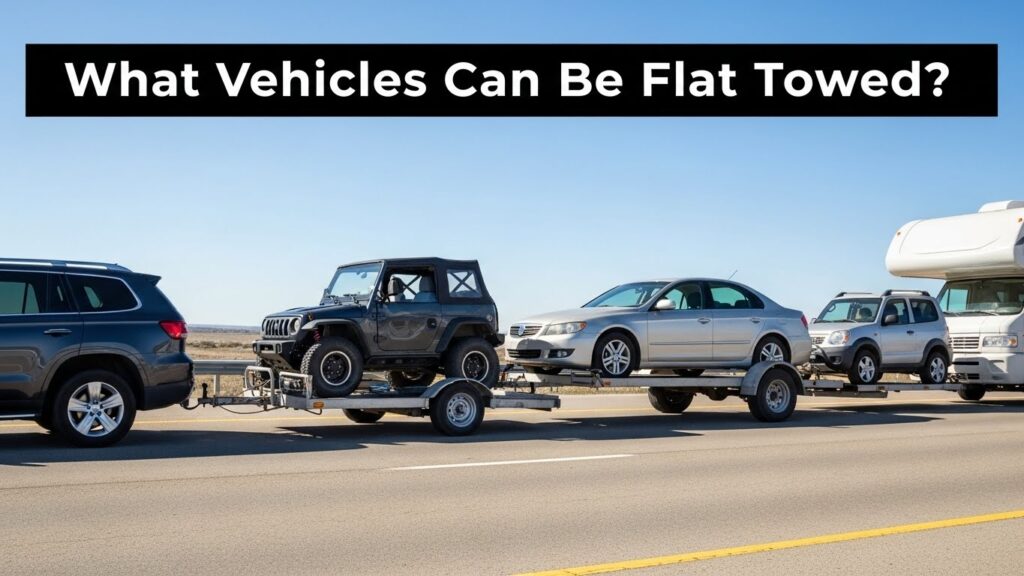
What Vehicles Can Be Flat Towed? Complete Overview
Blog What Vehicles Can Be Flat Towed? Complete Overview December 4, 2025 admin For many RV owners, nothing enhances a road trip quite like having a second vehicle ready to roll the moment you park the motorhome. Flat towing, pulling a vehicle with all four wheels on the road, remains the preferred method among seasoned RVers. The setup is compact, the hookup process is quick, and once you arrive, you gain the freedom to explore without maneuvering a full-sized RV through tight roads or crowded attractions. But the big question stands: What vehicles can actually be flat towed? And how can you be sure your specific make and model is compatible? Let’s break it all down in this comprehensive Tow Rankers guide. What Is Flat Towing? Flat towing, often called four-down towing or dinghy towing, is the process of attaching a tow-ready vehicle behind an RV using a tow bar system. Once connected, the towed vehicle rolls freely on all four wheels and trails behind the RV with minimal driver intervention. For RVers who want convenience without bulky equipment, flat towing is the perfect combination of simplicity and practicality. Different Ways to Tow a Vehicle Behind an RV Although “flat towing” technically refers to towing with all four wheels on the ground, RVers generally choose among three popular towing approaches: A-Frame (True Flat Towing) This is the classic version of four-down towing. ü Uses an A-shaped tow bar mounted to a base plate on the towed vehicle. ü Keeps all four wheels firmly on the pavement while traveling. ü Most favored option for motorhomes. ü Requires a supplemental braking system and proper alignment. A-frame towing is the only method considered true flat towing. The others below are used when a vehicle is not eligible for four-down towing. Tow Dolly Towing A tow dolly lifts the vehicle’s front wheels off the road: ü Front wheels ride on the dolly; rear wheels stay on the ground. ü Works well for cars that are not flat-tow capable. ü Reduces stress on certain transmissions. ü Requires additional loading and unloading. Trailer (Flatbed) Towing With this option, the entire vehicle sits on a flatbed trailer. ü None of the wheels touch the ground. ü Ideal for long-distance travel or protecting sensitive drivetrains. ü Perfect for inoperable or specialty vehicles. While not technically “flat towing,” it’s often compared as a safer alternative for vehicles that can’t be pulled four-down. What Types of Vehicles Can Be Flat Towed? Not every car, truck, or SUV is built to handle the demands of flat towing. The capability depends heavily on the vehicle’s transmission, drivetrain, and manufacturer specifications. Still, many popular models are designed for four-down towing, including compact cars, midsize SUVs, and numerous trucks. Here’s a breakdown of common towable vehicle categories: Small Cars Lightweight cars are among the easiest vehicles to flat tow because they reduce strain on the RV and simplify braking setups. Examples may include select years of: Ford Fiesta Chevrolet Sonic Note: Always verify by checking the owner’s manual. SUVs Many RVers prefer SUVs because they offer cargo room and passenger seating once they reach their destination. Common flat-tow favorites include: Jeep Wrangler Ford Explorer Pickup Trucks A great option for RVers who want a utility vehicle at camp or need extra hauling power. Eligible models include certain years of: Chevrolet Colorado Ford Ranger Commonly Flat-Towed Vehicles These are some of the most popular vehicles chosen by RVers for flat towing. Note that compatibility varies by model year, so always check the owner’s manual for confirmation: Buick Enclave Buick Envision Cadillac Escalade Cadillac SRX Chevrolet Blazer Chevrolet Colorado Chevrolet Equinox Chevrolet Silverado Chevrolet Sonic Chevrolet Suburban Chevrolet Tahoe Chevrolet Traverse Dodge Durango Ford Bronco Ford Edge Ford Expedition Ford Explorer Ford F-150 Ford Fiesta Ford Flex Ford Focus Ford Ranger GMC Acadia GMC Canyon GMC Sierra GMC Terrain GMC Yukon Honda CR-V Jeep Cherokee Jeep Gladiator Jeep Grand Cherokee Jeep Liberty Jeep Wrangler Lincoln MKX Lincoln Navigator Ram 1500 How to Determine If Your Vehicle Can Be Flat Towed Before towing any vehicle behind an RV, it’s crucial to understand the mechanical and manufacturer-specific requirements. Flat towing an incompatible vehicle can destroy the transmission, damage the driveline, or put you—and other drivers—at serious risk. Here are the key considerations: 1. Transmission Compatibility Manual transmissions tend to be more tow-friendly, but not universally. Automatic transmissions may require a lubrication pump or aftermarket modifications to prevent overheating or internal damage. 2. Drivetrain Setup Different drivetrains behave differently during flat towing: FWD: Often easiest to modify for towing. RWD: May require a driveshaft disconnect. AWD/4×4: Some must have a specific transfer case position (like Neutral), while others cannot be flat towed at all. 3. Vehicle Weight & RV Capacity Ensure your RV can safely pull the full weight of the towed vehicle plus any cargo inside. Overloading reduces braking performance and increases sway risk. 4. Manufacturer Rules & Limitations The owner’s manual is the ultimate authority. Some vehicles require specific: Base plates Tow bars Supplemental braking systems Ignition key positions Battery disconnects 5. Age & Condition of the Vehicle Older cars or