Blog
How to Tow an Automatic Car Safely? Methods & Tips
April 23, 2026
admin
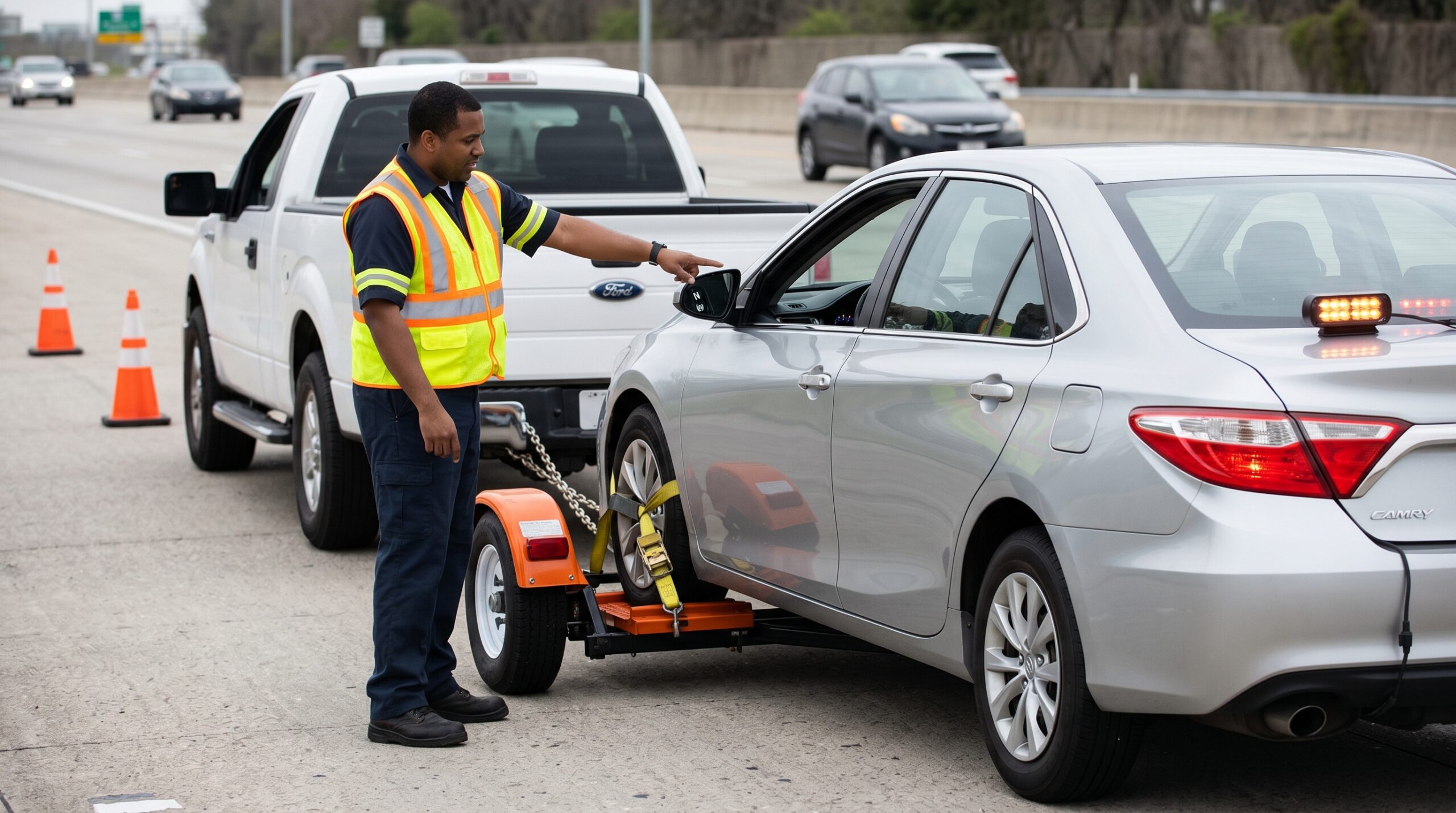
Towing a vehicle equipped with an automatic transmission requires a more cautious approach than towing a manual car. The core issue lies in the way automatic gear systems are designed: they depend heavily on continuous fluid circulation, which is typically maintained when the engine is running. When that flow stops, the internal components may not receive adequate lubrication during movement.
This is why vehicle owners often ask practical questions such as Is it okay to tow an automatic car in neutral? Can you tow an automatic car a short distance without causing harm? What happens if the car won’t start and still needs to be moved? The correct approach varies based on drivetrain layout, towing equipment, and the condition of the vehicle at the time of recovery.
Because improper towing can result in severe transmission damage, understanding the correct handling procedure is essential. Whether the situation involves a roadside breakdown, a mechanical failure, or emergency relocation, using the right towing method helps prevent long-term mechanical wear and expensive repairs.
Is It Safe to Tow an Automatic Car? Understanding the Reality
Modern vehicles increasingly use automatic transmissions, largely due to their ease of driving and widespread availability across most manufacturers. In many cases, manual variants are no longer offered, making automatics the default choice for everyday drivers.
However, this convenience comes with specific limitations when it comes to towing. A common misconception is that placing the gear selector in neutral makes it safe to tow an automatic vehicle like a manual one. In reality, this is not always true. Most automatic transmissions rely on an engine-driven lubrication system, meaning internal parts may not be properly lubricated when the engine is off.
If the vehicle is dragged with its drive wheels on the ground while the engine is not running, the transmission components can rotate without sufficient lubrication. Over time, or even within a short distance, this can lead to overheating and internal damage.
For this reason, many manufacturer guidelines explicitly advise against flat towing automatic vehicles unless specific conditions are met.
That said, towing is still possible when done correctly. The key requirement is ensuring that the drive wheels are not forced to rotate on the ground. This usually means lifting the driven axle completely off the surface using appropriate towing equipment such as a flatbed or wheel-lift system. In practical terms, an automatic vehicle should not simply be attached to a standard tow bar and pulled with all wheels rolling on the road, as this setup is not suitable for most automatic drivetrains.
You May Also Read: How to Tow a Car with a Truck?
Methods of Towing an Automatic Car
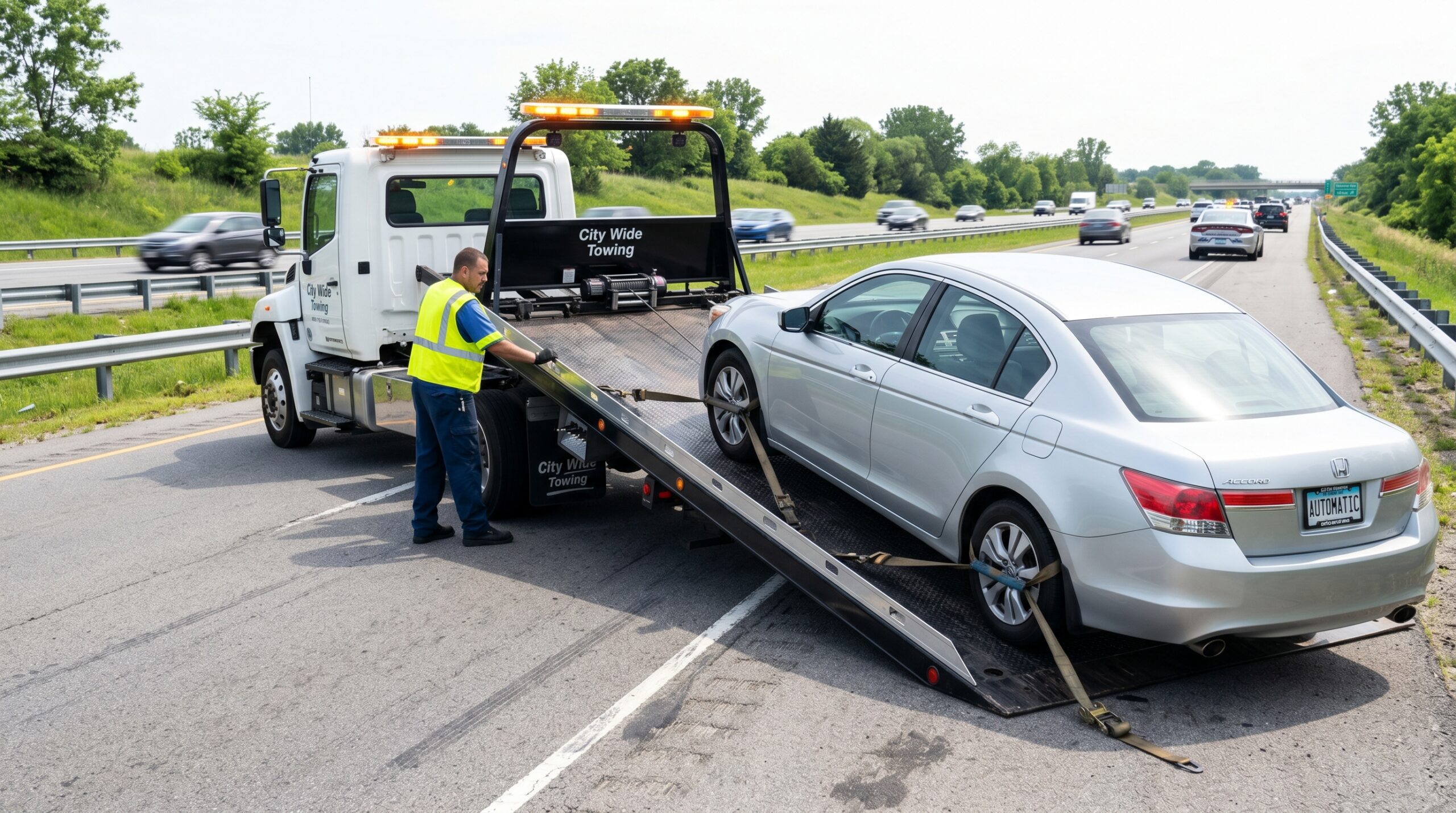
There is no single universal way to tow an automatic vehicle safely. The correct method depends on the drivetrain layout, vehicle weight, and the type of towing equipment available. Broadly, towing is carried out using three commonly accepted approaches, each with its own level of safety, complexity, and limitations.
Method 1. Towing an Automatic Car Using a Tow Bar
A tow bar setup connects the disabled vehicle directly to the towing vehicle through a rigid linkage. In this arrangement, the car being towed remains in contact with the road surface while being pulled from the front.
This method is often chosen because of its simplicity and quick setup. However, it comes with strict operational requirements. The transmission must be placed in neutral to prevent mechanical resistance during movement. If this step is ignored, the internal gearbox components may be forced to rotate incorrectly, increasing the risk of damage.
Weight capacity is another critical factor. Most standard tow bars are designed for lighter loads, typically around the 3,500-pound range, and exceeding this limit can compromise both safety and control.
Proper installation is equally important. Safety chains must be secured, electrical connections for brake lights and indicators should function correctly, and the tow vehicle must be able to communicate braking signals effectively. Without these precautions, road safety becomes a concern.
Method 2. Using a Tow Dolly for Automatic Vehicles
A tow dolly lifts the front axle of the disabled car off the ground while the rear wheels remain on the road. This makes it especially suitable for front-wheel-drive vehicles, as the driven wheels are elevated during transport.
Compared to a tow bar, a dolly provides more flexibility in certain scenarios. It can be used even when full neutral towing is not recommended, and it helps reduce strain on the transmission since the drive wheels are not rolling freely on the road surface.
Despite its advantages, this method also has practical drawbacks. The additional equipment increases overall weight, which can reduce fuel efficiency for the towing vehicle. Maneuvering a dolly setup can also be more challenging, particularly in tight spaces or heavy traffic conditions.
As with any towing system, proper securing of the vehicle is essential. Straps, wheel locks, lighting connections, and signaling systems must all be correctly installed before moving the vehicle.
Method 3. Towing an Automatic Car in Neutral
One commonly discussed approach is placing the vehicle in neutral and towing it with all wheels on the ground. In theory, this allows the wheels to rotate without engaging the transmission directly.
However, this method is not universally safe for all automatic vehicles. Many transmissions rely on engine-driven lubrication systems, meaning internal components may not receive adequate oil flow when the engine is off. As a result, rotating the drivetrain while the engine is inactive can lead to overheating and internal wear.
For this reason, manufacturer guidelines often restrict or discourage this towing method unless the vehicle is specifically designed to support it. Checking the owner’s manual is essential before attempting this option.
Even when neutral towing is technically allowed, it is typically limited to short distances and low speeds. If the drive wheels remain in contact with the road for extended periods, the risk of transmission damage increases significantly.
Safety Steps to Follow When Towing an Automatic Car
Towing an automatic vehicle requires a controlled, well-prepared approach is necessary to reduce mechanical strain and maintain road safety. Before initiating the towing process, several key precautions should always be taken.
Verify Towing Capacity and Weight Compatibility
One of the first considerations is weight compatibility between the towing vehicle, the recovery equipment, and the disabled car. Every tow setup has a defined load limit, and exceeding it can create serious risks.
If the combined load goes beyond the rated capacity, it may lead to brake failure, overheated components, loss of control, or unsafe handling during transit. Ensuring proper weight alignment is therefore essential before any movement begins.
Install or Use a Suitable Braking System
For safe towing, braking control cannot be ignored. A supplementary braking system helps stabilize the towed vehicle and reduces strain on the towing vehicle during deceleration.
This becomes especially important when dealing with heavier cars or longer distances. Without proper braking assistance, stopping distance increases significantly, raising the risk of collisions or loss of control.
Ensure the Right Towing Equipment is Used
The choice of equipment plays a critical role in preventing transmission or structural damage. Whether using a dolly or tow bar, all components must be compatible with the vehicle type and properly rated for its weight.
Incorrect or low-quality equipment increases the likelihood of improper alignment, mechanical stress, or detachment during movement. Following manufacturer guidelines and setup instructions is essential for safe operation.
Carry an Emergency Preparedness Kit
Unexpected situations can arise during towing, especially on highways or long routes. Keeping an emergency kit inside the towing vehicle adds an extra layer of safety.
A basic kit should include first aid supplies, warning triangles or reflective markers, and a fire extinguisher. These items help manage roadside emergencies until professional assistance arrives.
Perform a Full Vehicle Inspection Before Towing
Before the towing process begins, the disabled vehicle should be inspected carefully. Key systems such as tires, brakes, steering components, suspension, and wheel alignment should be checked for visible issues.
Any pre-existing damage or mechanical weakness can worsen during towing if not identified in advance. A quick but thorough inspection helps reduce the risk of failure during transport.
Are There Any Special Cases for Towing an Automatic Car?
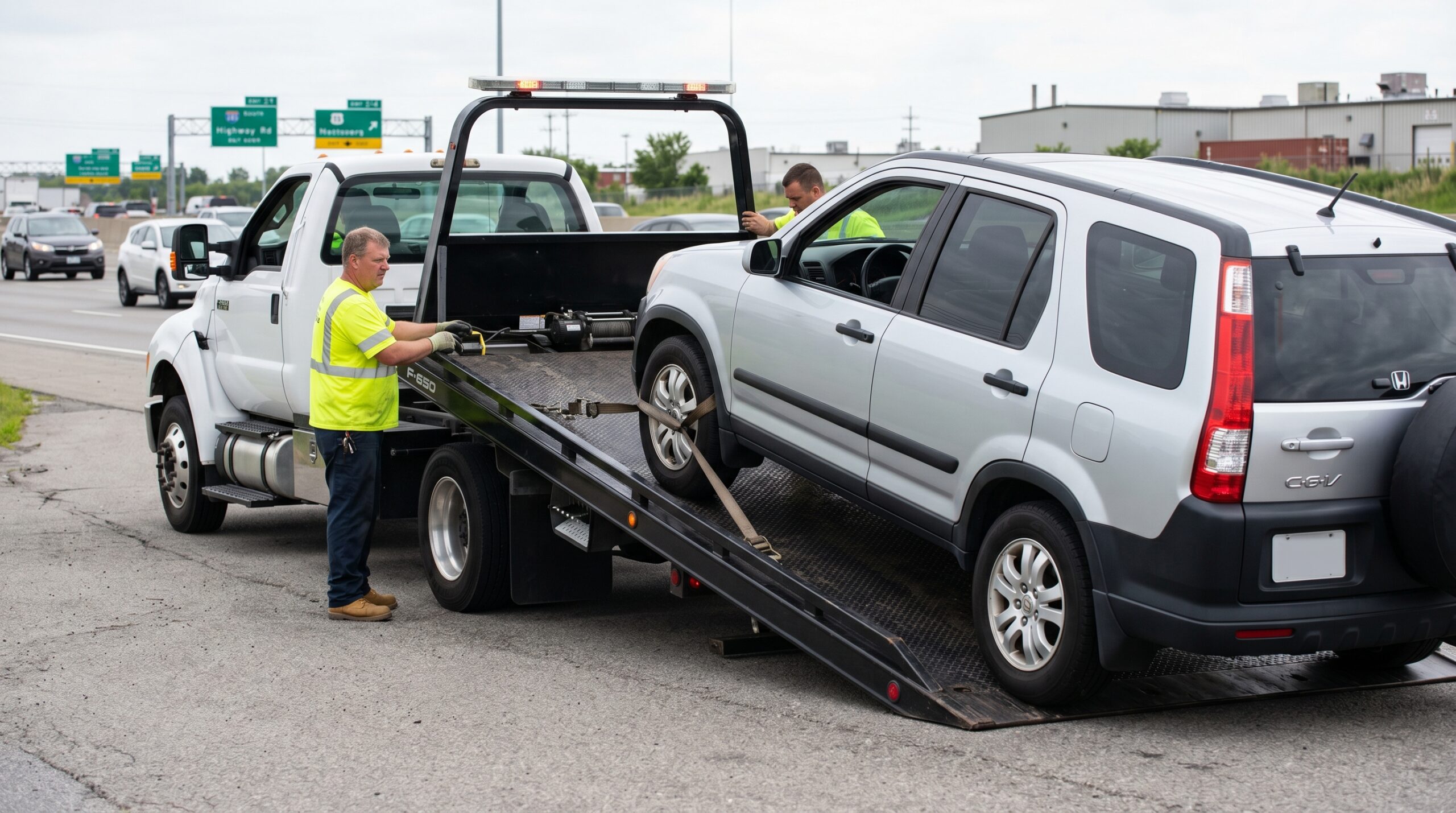
Although automatic vehicles generally require careful handling, there are limited situations where towing becomes possible under controlled conditions.
Manufacturer-Specific Towing Allowance
Some modern automatic vehicles are built with transmission systems that permit limited towing, but only under strict conditions defined by the manufacturer. These exceptions are not universal and must always be verified through official specifications.
Owner’s Manual as the Primary Reference
In breakdowns or emergencies, the first step should always be checking the vehicle’s manual. It outlines whether towing is allowed, and if so, the exact speed, distance, and method restrictions to prevent transmission damage.
Strict Limits on Distance and Speed
Even when towing is permitted, it is usually restricted to short distances and low speeds. These limitations are designed to reduce internal friction and prevent overheating within the transmission system.
Reliance on Verified Guidance Only
Safe towing decisions should be based exclusively on manufacturer instructions. Informal advice or general assumptions can lead to incorrect handling and potentially expensive mechanical failure.
Capability for Light Trailers or Caravans (Selected Models)
Certain automatic vehicles are engineered to tow light loads such as caravans or small trailers. However, this capability depends heavily on engine power, transmission design, and overall vehicle build.
Impact of Weight Distribution on Stability
Towing performance is influenced by how the weight is distributed between the vehicle and the trailer. In some configurations, automatic systems and drivetrain setups can contribute to improved balance and smoother handling.
Multi-Gear Transmission Advantage
Modern automatic transmissions use multiple gear ratios, allowing the system to adapt efficiently during towing. This helps maintain steady engine performance without requiring manual gear changes.
Adaptive Transmission Efficiency Benefits
Advanced automatic systems can optimize fuel usage and gear selection automatically, which may improve control and efficiency in controlled towing scenarios compared to older transmission designs.
FAQs on Towing an Automatic Car
Placing an automatic vehicle in neutral does not automatically make it safe for towing. Even in neutral, if the engine is off, the transmission may continue to rotate without proper lubrication. This can result in internal wear or damage. For this reason, neutral gear alone should not be considered a safe towing solution using a rope or standard tow setup.
The main concern lies in how automatic transmissions function. When the vehicle is being pulled, the drive wheels force internal components of the transmission to move. However, without the engine running, the lubrication system is not active, meaning essential parts may operate without sufficient fluid protection. This lack of lubrication is what leads to overheating and mechanical failure.
There is no universal safe distance, as limits vary depending on the manufacturer and vehicle design. Some guidelines may allow very limited towing at controlled speeds, but many manufacturers discourage it entirely. As a precaution, the owner’s manual should always be treated as the final authority for distance and speed restrictions.
Certain automatic vehicles can be flat towed behind motorhomes, but only if they are specifically designed for it or fitted with approved towing equipment. In most cases, additional systems or configurations are required. Where this capability is not explicitly stated by the manufacturer, a tow dolly or flatbed trailer is the safer alternative.
Even short towing distances can pose a risk if the incorrect method is used. Transmission damage does not always depend on how far the vehicle is moved, but rather on how it is moved. Because of this, the safest approach remains using a flatbed truck or properly configured towing equipment regardless of distance.
Yes, improper towing can lead to serious and costly transmission failure. If the drivetrain is forced to operate without lubrication or under incorrect loading conditions, internal components can overheat or seize. In severe cases, the damage may extend beyond the transmission and affect other drivetrain parts, potentially resulting in complete vehicle failure.
Most automatic transmissions rely on engine-driven pumps to circulate transmission fluid. When the engine is not running, this lubrication process stops. Without it, internal components can suffer rapid wear. While a few modern vehicles are designed for flat towing, this is an exception rather than the norm and must always be confirmed through manufacturer guidance.
Technically, towing with the engine running can maintain transmission fluid circulation, but it is not considered a safe or practical method in most situations. The risks associated with control, stability, and improper setup still remain high, making this approach unsuitable except in very specific controlled conditions.
Towing a vehicle in park is only safe if the drive wheels are completely lifted off the ground. If the wheels remain on the road while in park, the parking pawl inside the transmission can be severely damaged. Proper methods, such as a flatbed truck, tow dolly, or axle-lift towing, are required to prevent this type of failure.